
Showing 1–12 of 337 results


End of content
End of content
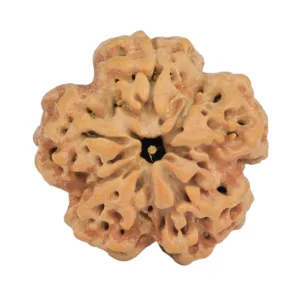
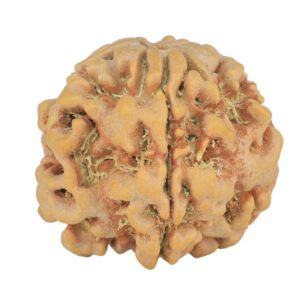
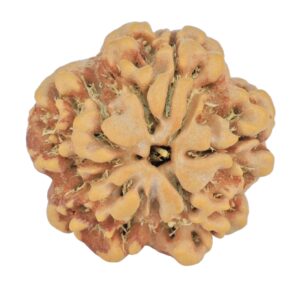
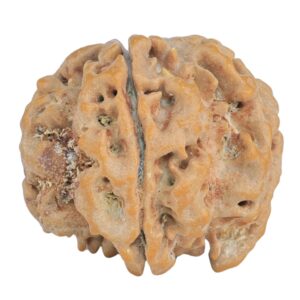
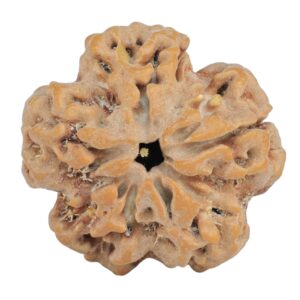
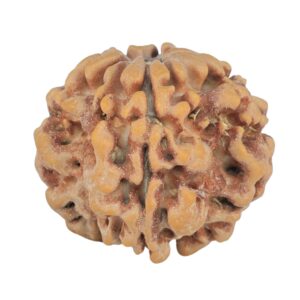
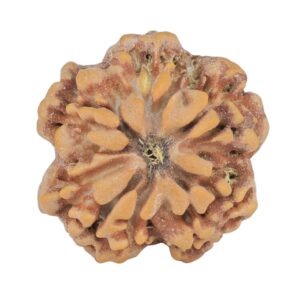
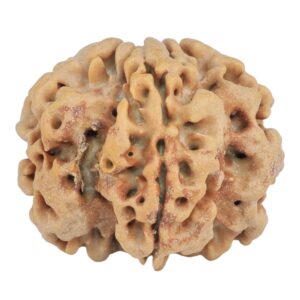
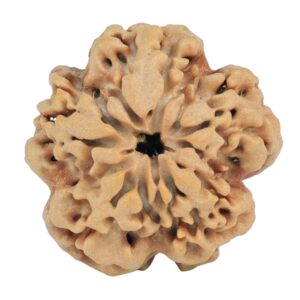
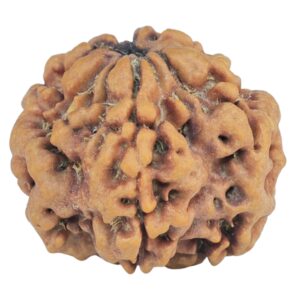
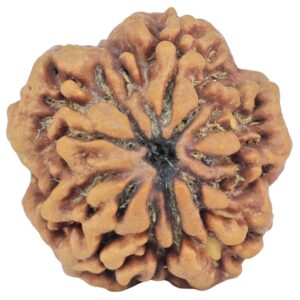
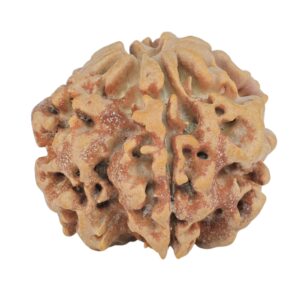
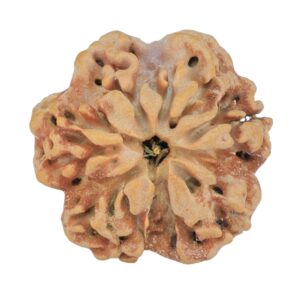
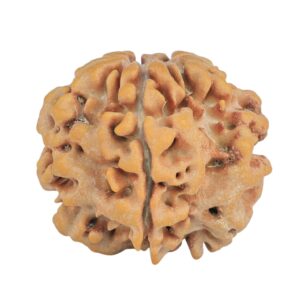
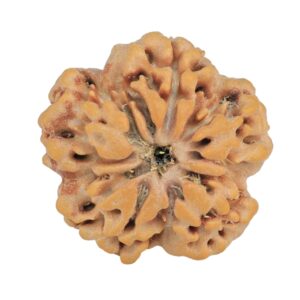
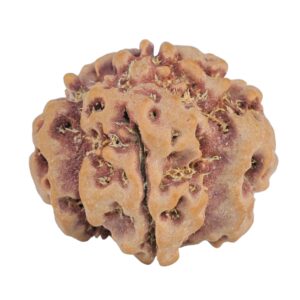
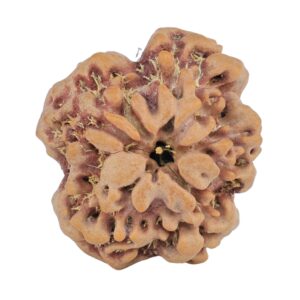
The 1 Mukhi Rudraksha is a single-faced Rudraksha bead, associated directly with Lord Shiva, with the Sun (Surya) as its ruling planet. Also called Ek Mukhi or One Mukhi Rudraksha, it is worn for meditation, clarity and inner stillness. It occurs in several forms round, half-moon and underdeveloped and the form matters as much as the mukhi count, because a fully round one-faced bead is among the rarest beads in the world.
1. Round Nepali
Where it comes from: Nepal
What it looks like: Fully round, heavy, and dense, with one deep, unbroken line running around the bead.
Availability & price: Extremely rare. Very few verified examples exist, and most beads sold under this name are not genuine.
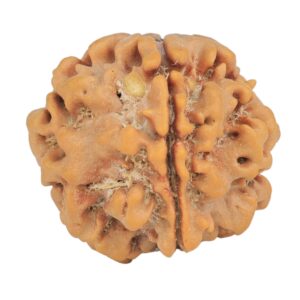
2. Half-Moon
Where it comes from: Java (Indonesia), North India, South India, Sri Lanka
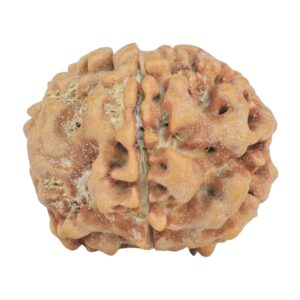
What it looks like: Curved, crescent-shaped, or oval; flatter than a round bead, with one clear natural line.
Availability & price: The most commonly available form. This is what most buyers actually receive.
3. Small Indonesian
Where it comes from: Java (Indonesia)
What it looks like: Small, smooth-surfaced, with a single natural cleft.
Availability & price: Widely available and the most affordable genuine option.
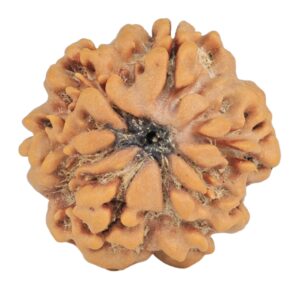
4. Underdeveloped
Where it comes from: Nepal, Indonesia, India
What it looks like: A real Rudraksha seed in which the mukhi lines did not fully form, so only one line is visible.
Availability & price: Available in quantity and priced below a fully formed bead of the same size.
5. Carved or Joined
Where it comes from: Workshops, not trees
What it looks like: Straight machine-cut lines, heavy polish, or a visible seam where two halves have been glued.
Availability & price: Often sold as “round Nepali 1 Mukhi” at low prices, but these are not genuine 1 Mukhi Rudraksha.
Some beads on this page are graded 1MK (Underdeveloped). This is a grading term, not a defect and not a marketing label, and it is worth understanding before you choose.
A Rudraksha seed develops its mukhi lines while it grows on the tree. In an underdeveloped bead, that process did not complete, so the seed is a genuine Rudraksha but shows only one visible line instead of the two, three or more it would otherwise have carried. In the trade these are also called Savar or Andhmukhi beads.
What this means in practice:
If you are unsure which form suits your practice, ask us before you order. For a specific astrological purpose, a consultation is worth having first.
A Rudraksha bead carries natural clefts, called mukhi, that run from top to bottom. A 1 Mukhi Rudraksha has a single such line. Because one face means undivided oneness, this bead is associated directly with Lord Shiva rather than with a form or aspect of him, which is why tradition treats it as the highest of the Rudraksha beads.
Its ruling planet is the Sun, which governs the self, authority, vitality and clarity of purpose. A 1 Mukhi is therefore linked with self-realisation and with the steadiness of someone who leads, rather than with any single material outcome.
In practice the Ek Mukhi Rudraksha is worn by meditators, sadhaks and people on a defined spiritual path, and by those who want detachment from mental noise. It is also chosen by people in positions of responsibility for clarity in decision-making. Because a fully formed round bead is so rare, most practitioners wear a half-moon, Indonesian or underdeveloped one-faced bead.
In Vedic astrology the Sun (Surya) governs the self, the father, authority, vitality, bones and eyesight, reputation and the ability to lead. A weak or afflicted Sun is traditionally linked with low confidence, difficulty holding authority, strained relations with the father or with seniors, and a sense of drifting without purpose.
The 1 Mukhi Rudraksha is the bead assigned to the Sun, which is why it is suggested in these situations:
When the Sun is weak, debilitated or badly placed in the birth chart
During a Sun mahadasha or antardasha
Because a 1 Mukhi is both rare and expensive, a consultation is strongly advised before buying one as a planetary remedy. In many cases a 12 Mukhi Rudraksha is suggested instead, as it carries the same planetary association and is easier to source in a verified form.
The 1 Mukhi Rudraksha suits people whose need is inward rather than material: meditators and sadhaks with a regular practice, yoga practitioners and teachers, sanyasis and those on a defined spiritual path, and people in senior positions who need clarity under pressure. Both men and women can wear it, and there is no age restriction in traditional practice.
It is also chosen by people who feel mentally crowded, emotionally heavy or spiritually disconnected, and by those who want detachment from a situation they cannot change. Because it is a rare and expensive bead, it is best chosen after guidance rather than on impulse. Anyone new to Rudraksha is usually advised to begin with a 5 Mukhi.
No other Rudraksha has as wide a price range as the 1 Mukhi, and the reason is form rather than mukhi count. Price depends on:
At Rudraksha Sanskar, 1 Mukhi Rudraksha beads are currently priced from ₹5,250 to ₹13,450, across 304 beads and four origins. Underdeveloped beads sit at the lower end and fully formed larger beads at the higher end. If you are offered a large, round, heavy Nepali 1 Mukhi for a few thousand rupees, treat it as a carved or joined bead, however good the certificate looks.
1. Establish the form first. Decide whether you are being offered a round Nepali, a half-moon, a small Indonesian or an underdeveloped bead. Everything else follows from this.
2. Check the line runs the whole way. One natural cleft should run unbroken from the top hole to the bottom hole, following the surface rather than cutting across it.
3. Look for natural unevenness. A natural line is irregular in depth and width. A perfectly straight, even line of uniform depth is machine-cut.
4. Feel for heavy polish. A glossy, plastic-smooth finish is used to hide carving. An original bead has a natural, slightly rough texture.
5. Look for a seam. Joined beads, made by gluing two halves, show a faint ring where they meet. Check the whole circumference in daylight.
6. Ask for an X-ray. An X-ray shows the internal compartments and is the single most reliable check on a one-faced bead, because the inside cannot be polished.
7. Ask for a lab certificate with a unique number that you can match to the exact bead you receive, not a generic printout.
8. Weigh the price against the form. A cheap round Nepali 1 Mukhi does not exist. Price that does not fit the claimed form is the clearest warning sign there is.
Avoid sellers who use stock photographs, will not show close-ups of the line, cannot tell you the origin, or describe every bead simply as “original 1 Mukhi” without naming its form.
Still unsure which Rudraksha is right for you? Get a FREE Rudraksha consultation from our experts.
Showing 1–12 of 337 results
End of content
End of content
The 1 Mukhi Rudraksha is a single-faced Rudraksha bead associated directly with Lord Shiva, with the Sun as its ruling planet. Also called Ek Mukhi or One Mukhi Rudraksha, it occurs in round, half-moon and underdeveloped forms, and is worn for meditation, clarity and detachment.
The 1 Mukhi Rudraksha is traditionally worn for depth in meditation, clarity of mind and detachment from mental noise. It is believed to support confidence and authority, help self-awareness for seekers, steady daily discipline, and strengthen a weak Sun in the birth chart.
The 1 Mukhi Rudraksha is associated with Lord Shiva himself, not with a form or aspect of him, which is why tradition treats it as the highest Rudraksha. Its ruling planet is the Sun (Surya), which governs the self, authority, vitality and clarity of purpose.
A round 1 Mukhi is fully spherical, heavy and dense, and is extremely rare. A half-moon 1 Mukhi is curved or crescent-shaped, flatter, and comes from Java, India or Sri Lanka. Both are genuine Rudraksha; the half-moon is the form most buyers actually receive.
An underdeveloped 1 Mukhi is a genuine Rudraksha seed in which the mukhi lines did not fully form, so only one line is visible. In the trade it is also called Savar or Andhmukhi. It is not a carved bead, and it is not priced as a fully formed 1 Mukhi.
First establish the form — round, half-moon, Indonesian or underdeveloped. Then check that one natural line runs unbroken from hole to hole, that it is irregular rather than machine-straight, that there is no seam or heavy polish, and that an X-ray and a numbered lab certificate are provided.
The beej mantra of the 1 Mukhi Rudraksha is Om Hreem Namah. It is chanted 108 times while energising the bead, and briefly each morning afterwards. Om Namah Shivaya is also widely chanted with this bead.
Don't have an account yet? Sign up
No items in your cart. Go on, fill it up with something you love!
Start Shopping Now
Namaste 🙏 Welcome to Rudraksha Sanskar
Need help choosing authentic Rudraksha? Call / WhatsApp us on
+91 70783 00563
Get personal guidance for authentic Rudraksha selection. Get a free consultation here
Usually replies quickly on WhatsApp
+91 70783 00563Authentic Rudraksha guidance, product availability, order support and international shipping enquiry.
Fill your details and our team will contact you soon.
Powered by Rudraksha Sanskar
Thank you for contacting us.
Your Consultation Code is:
Please save this code for future reference.


