
Showing 1–12 of 127 results
End of content
End of content
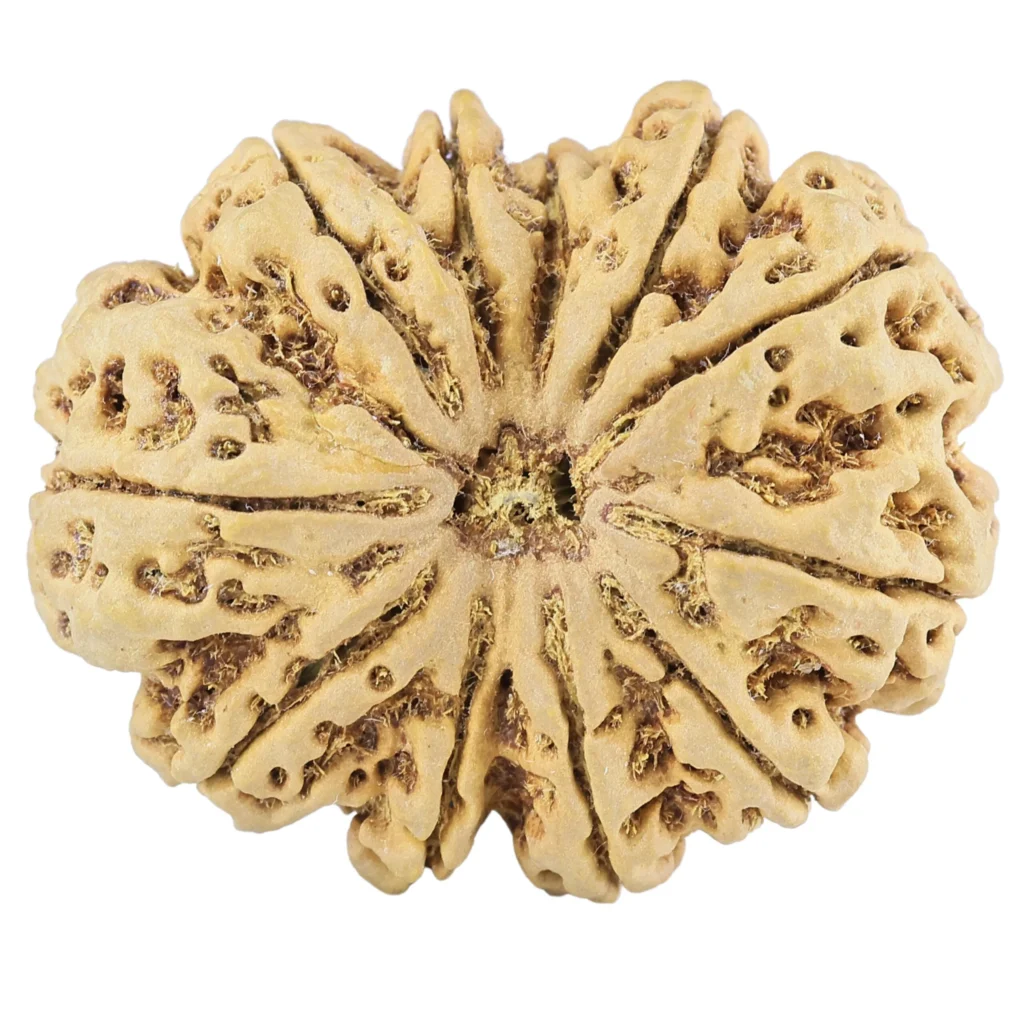
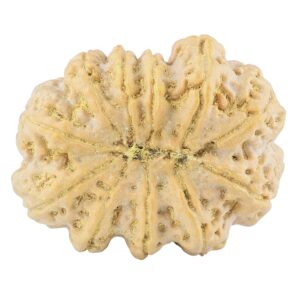
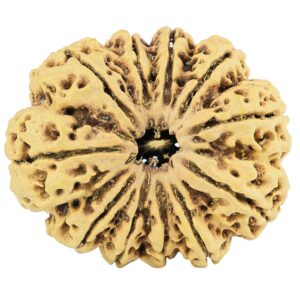
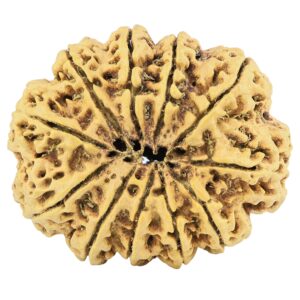
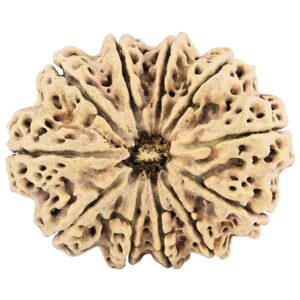
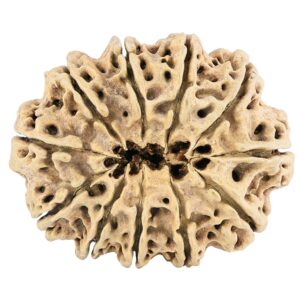
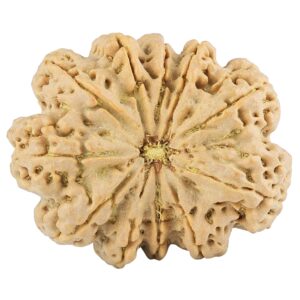
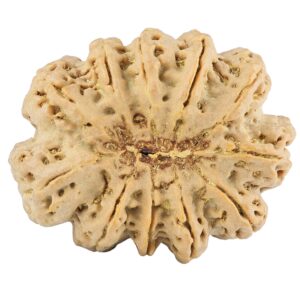
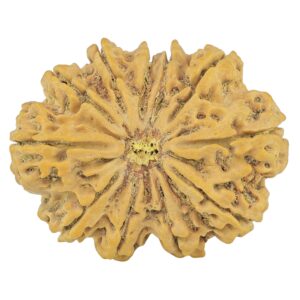
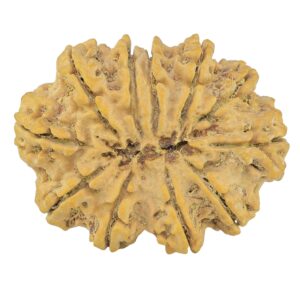
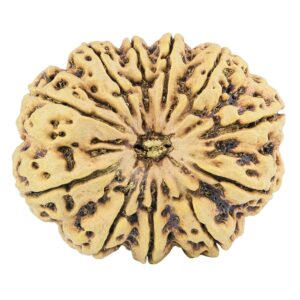
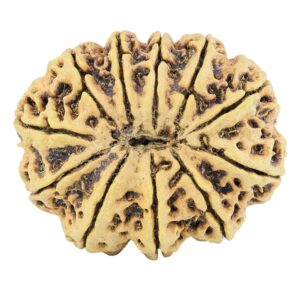
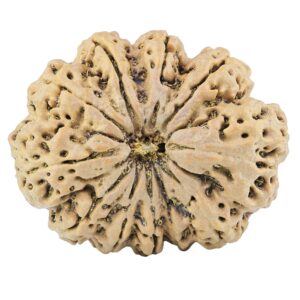
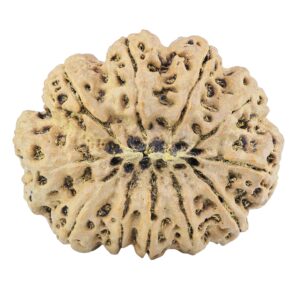
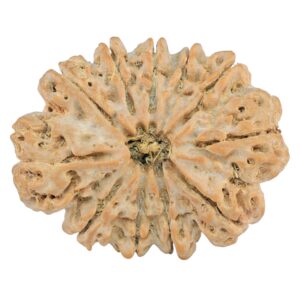
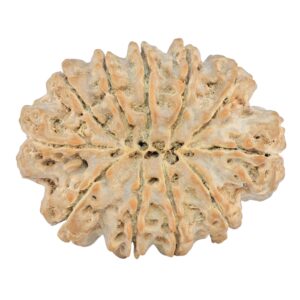
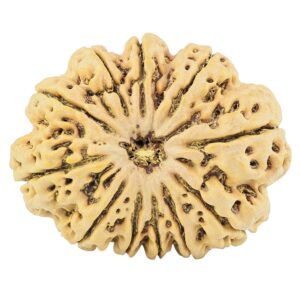
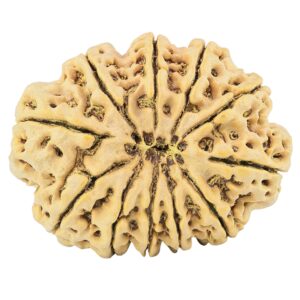
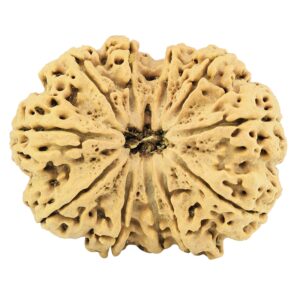
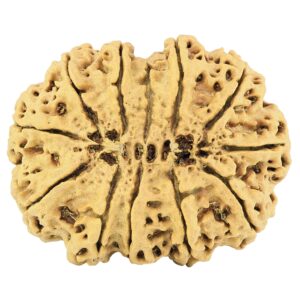
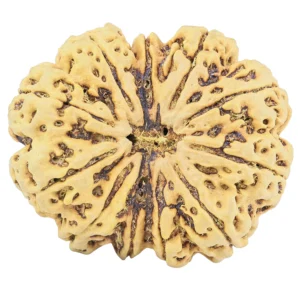
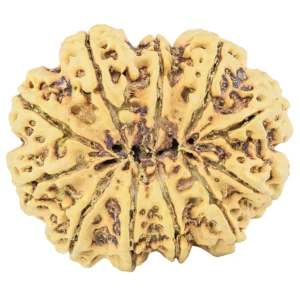
The 11 Mukhi Rudraksha is an eleven-faced seed of the Elaeocarpus ganitrus tree, traditionally ruled by Lord Hanuman and the eleven Rudras, with Mars (Mangal) as its ruling planet. Also called Gyarah Mukhi or Ekadash Mukhi Rudraksha, it is worn for courage, confidence, willpower and protection. An original bead carries eleven unbroken natural mukhi lines and comes with lab certification and an X-ray report. Every 11 Mukhi Rudraksha below is a Nepali bead, individually photographed, lab-certified and X-ray verified before dispatch. Each listing shows its own certificate number, size in millimetres and weight in grams, so you know exactly which bead is reaching you.
A Rudraksha bead carries natural clefts, called mukhi, that run from top to bottom. An 11 Mukhi Rudraksha has eleven such lines formed naturally as the seed grows on the tree. In Rudraksha tradition, the mukhi count decides which deity and which planet the bead is connected to.
The eleven faces represent the Ekadash Rudra, the eleven forms of Lord Shiva, and the bead is most closely associated with Lord Hanuman, the eleventh Rudra. Because Hanuman is linked with Mars (Mangal), the 11 Mukhi Rudraksha is traditionally used where courage, discipline, physical energy and fearlessness are needed.
This is why it is chosen by people going through fear, hesitation, weak confidence or repeated obstacles, and by sadhaks who want steadiness in daily practice. Unlike a 5 Mukhi Rudraksha, which is common and calming, the 11 Mukhi is rarer and is worn for strength and protection rather than only peace.
These are traditional and scriptural beliefs followed in Rudraksha practice. A Rudraksha is a spiritual aid and is not a substitute for medical treatment or professional advice.
The 11 Mukhi Rudraksha suits people whose work needs nerve rather than only calm: business owners, sales and field professionals, senior managers, police and defence personnel, athletes and coaches, students facing competitive exams, and devotees of Lord Hanuman. Both men and women can wear it, and there is no age restriction in traditional practice.
It is also chosen by people who feel constant fear or nervousness, who lose confidence in front of others, who start work but cannot finish it, or who feel drained by negativity around them. In astrology it is often suggested where Mars is weak or afflicted in the birth chart, though a consultation is advised before choosing the bead.
The price of an original 11 Mukhi Rudraksha in India depends on six things, not on the mukhi count alone:
At Rudraksha Sanskar, 11 Mukhi Rudraksha beads are currently priced from ₹[lowest] to ₹2,50,000. As a reference, Nepali beads in the 37–39.5 mm range are listed between ₹75,000 and ₹2,50,000, while smaller beads cost considerably less. If a seller offers a large Nepali 11 Mukhi Rudraksha for a few hundred rupees, it is almost always an Indonesian bead, a carved fake, or a 5 Mukhi bead with cut lines.
Still unsure which Rudraksha is right for you? Get a FREE Rudraksha consultation from our experts.
Showing 1–12 of 127 results
End of content
End of content
The 11 Mukhi Rudraksha is a Rudraksha bead with eleven natural mukhi lines on its surface. It represents the Ekadash Rudra, the eleven forms of Lord Shiva, and is associated with Lord Hanuman and the planet Mars. It is traditionally worn for courage, confidence and protection.
The 11 Mukhi Rudraksha is traditionally worn for courage, confidence, willpower and freedom from fear. It is believed to give protection from negative energy, support clear and confident speech through the Vishuddha chakra, and help maintain discipline in work and spiritual practice.
The 11 Mukhi Rudraksha is ruled by Lord Hanuman and the eleven Rudras, and its ruling planet is Mars (Mangal). Because Mars governs courage, energy and discipline in astrology, this bead is often suggested when Mars is weak or afflicted in a birth chart.
Tuesday or Saturday is traditionally preferred for the 11 Mukhi Rudraksha, as both days are associated with Lord Hanuman. Monday and Shravan Somvar are also widely used, since every Rudraksha belongs to Lord Shiva. Wear it in the morning after a bath, facing east.
An original 11 Mukhi Rudraksha has exactly eleven unbroken natural mukhi lines running from the top hole to the bottom hole, an uneven thorny surface, and no cut or painted lines. Ask for an X-ray report and a lab certificate whose unique number matches the bead you receive.
Don't have an account yet? Sign up
No items in your cart. Go on, fill it up with something you love!
Start Shopping Now
Namaste 🙏 Welcome to Rudraksha Sanskar
Need help choosing authentic Rudraksha? Call / WhatsApp us on
+91 70783 00563
Get personal guidance for authentic Rudraksha selection. Get a free consultation here
Usually replies quickly on WhatsApp
+91 70783 00563Authentic Rudraksha guidance, product availability, order support and international shipping enquiry.
Fill your details and our team will contact you soon.
Powered by Rudraksha Sanskar
Thank you for contacting us.
Your Consultation Code is:
Please save this code for future reference.


