21 Mukhi Rudraksha
Buy Original 21 Mukhi Rudraksha Online
The 21 Mukhi Rudraksha is a twenty-one-faced seed of the Elaeocarpus ganitrus tree and the rarest Rudraksha in regular circulation, traditionally associated with Lord Kuber, the divine treasurer. Also called Ikkees Mukhi Rudraksha, it is worn for wealth, authority, protection and fulfilment. Because genuine twenty-one-faced beads occur so rarely, a certified bead is priced in lakhs, and verification matters more here than with any other Rudraksha. Every 21 Mukhi Rudraksha below is listed individually with its origin, size in millimetres, weight in grams, its own lab certificate number and its X-ray number, so you can verify the exact bead before you commit. Our stock covers 32 beads from 10.5 mm to 34.2 mm across Nepali and Indonesian origins.
What is 21 Mukhi Rudraksha? Meaning and Significance
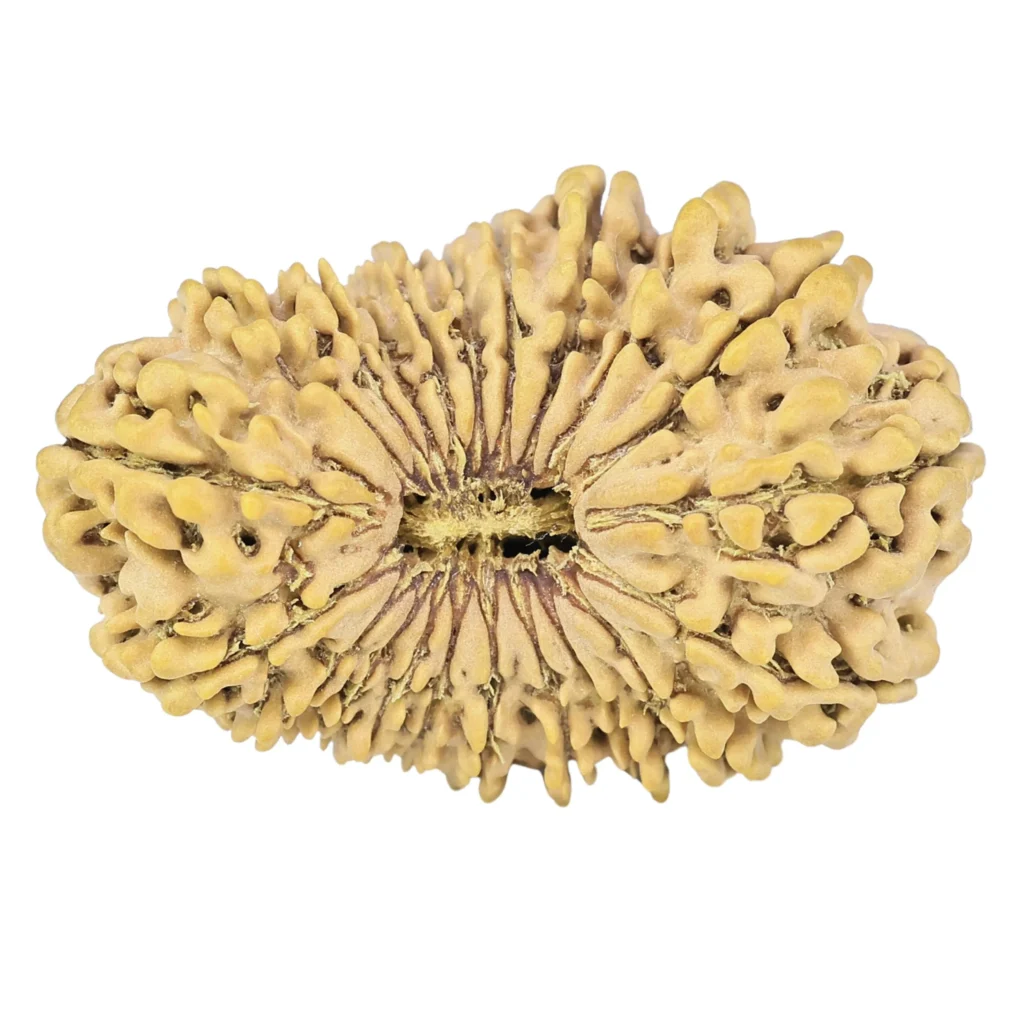
A Rudraksha bead carries natural clefts, called mukhi, that run from top to bottom. A 21 Mukhi Rudraksha has twenty-one such lines formed naturally as the seed grows on the tree. In Rudraksha tradition, the mukhi count decides which deity the bead is connected to, and twenty-one is the highest count found in regular circulation.
The bead is associated with Lord Kuber, the treasurer of the gods and the keeper of wealth, and tradition also describes it as carrying Brahma, Vishnu and Shiva together creation, preservation and dissolution in one seed. This is why it is spoken of as a bead of completeness rather than of one specific outcome.
In practice the Ikkees Mukhi Rudraksha is worn by people who already carry wealth and responsibility and want to hold and grow both: business owners, industrialists, investors and family-business heads. It is also worn by seekers who want material stability and spiritual protection together rather than one at the cost of the other.
21 Mukhi Rudraksha Benefits
- Wealth & Abundance: Traditionally associated with Lord Kuber and prosperity.
- Business Growth: Believed to support expansion, new ventures, and important business decisions.
- Authority & Leadership: Traditionally worn to strengthen confidence, presence, and leadership qualities.
- Protection: Believed to help protect existing wealth, position, and achievements.
- Protection from Evil Eye: Traditionally worn to guard against jealousy and negative intentions.
- Aura & Charisma: Associated with a strong presence, confidence, and being noticed by others.
- Fulfilment & Contentment: Traditionally linked with a sense of completeness and satisfaction.
- Stability: Believed to provide support during financial pressure, disputes, or uncertain periods.
- Better Decision-Making: Traditionally worn for steadiness and clarity during significant decisions.
- Material & Spiritual Balance: Associated with the combined energies of Brahma, Vishnu, and Shiva.
Why 21 Mukhi Rudraksha Is the Rarest Bead
- Most seeds are 5 Mukhi. A Rudraksha tree produces overwhelmingly five-faced seeds. Every additional mukhi is a departure from the norm.
- Occurrence falls sharply with count. Beads above fourteen mukhi are uncommon, and twenty-one is at the far end. Twenty-one clean, countable lines on one seed is a natural exception.
- Size makes it rarer again. A small 21 Mukhi occurs more often than a large one. A large Nepali bead with all lines clear is the rarest combination of all.
- Condition removes most candidates. Cracks, insect holes and merging lines rule out many beads that would otherwise qualify.
- Verification is slow. Counting twenty-one lines reliably takes an X-ray, not a glance, so verified beads move slowly through the trade.
Who Should Wear 21 Mukhi Rudraksha?
The 21 Mukhi Rudraksha suits people who already carry wealth and responsibility: business owners and promoters, industrialists, investors and traders operating at scale, family-business heads, and senior professionals whose decisions affect many people. Both men and women can wear it, and there is no age restriction in traditional practice.
It is also chosen by people protecting what they have built through a dispute, a downturn or a transition and by seekers who want material stability and spiritual protection together. Because of its value, it is bought after a consultation, never on impulse. Anyone new to Rudraksha is advised to begin with a 5 Mukhi, and anyone seeking wealth on a normal budget is usually better served by a 7 Mukhi or a 13 Mukhi.
How to Identify Original 21 Mukhi Rudraksha
- Count all twenty-one lines in daylight. Every line must run unbroken from the top hole to the bottom hole. If you cannot count twenty-one clearly, treat the claim as unproven.
- Check whether any line is carved. A carved line is straight, even in depth and sharp-edged, and often paler inside. Natural lines vary along their length.
- Look for added lines on a lower-mukhi bead. The commonest fraud is a 12 or 14 Mukhi bead with extra lines cut in. Compare the depth and texture of every line against the others; the added ones look too similar.
- Feel for heavy polish. A glossy, plastic-smooth finish is used to hide carving. An original bead has a natural, slightly rough texture.
- Look for a seam or filler. Composite beads, assembled from pieces, show a faint ring or a patch of different texture.
- Insist on an X-ray. An X-ray shows the internal compartments. On a 21 Mukhi this is not optional — it is the only reliable way to count what is inside, and the inside cannot be polished.
- Match the certificate to the bead. The certificate must carry a unique number tied to the exact bead you are buying, not a generic printout.
- Judge the price against the claim. A cheap 21 Mukhi does not exist. Price that does not fit the claimed origin and size is the clearest warning sign there is.
How We Verify Every 21 Mukhi Bead
- Lab certification — every bead is tested by an independent laboratory and carries a certificate with a unique number tied to that bead alone.
- X-ray imaging — the internal compartments are imaged and counted, and the X-ray number is published on the listing so you can match it.
- Individual photography — the bead you see is the bead you receive. No stock images.
- Recorded size and weight — measured in millimetres and grams, and published, so the bead can be checked on arrival.
- Stated origin — Nepali or Indonesian, named on the listing rather than left vague.
- Video on request — close-up video of the exact bead, rotating, so all twenty-one lines can be counted before you commit.
- Consultation before purchase — we discuss purpose, size and budget, and will say if a different bead suits you better.
How to Wear 21 Mukhi Rudraksha: Day, Method and Mantra
- Choose the day. Thursday is traditionally preferred. Monday, a Purnima, Mahashivratri or Dhanteras also suit — Dhanteras especially, being the day of Kuber puja.
- Bathe and sit clean. Begin in the early morning after a bath, facing east, in a clean and quiet place. Brahma muhurta is traditionally preferred.
- Cleanse the bead. Rinse it in clean water, then in raw cow’s milk or Ganga jal if available, rinse again and wipe dry. A light touch of pure ghee or sandalwood paste is used in some traditions.
- Energise it. Place the bead before a Shiva lingam or an image of Lord Kuber, offer flowers, incense and a lamp, and chant Om Hreem Kleem Shreem Kuberaya Namah 108 times. Om Namah Shivaya may be chanted as well.
- Wear it. Wear it as a pendant on a red silk or cotton thread, or capped in gold or panchdhatu, so the bead rests near the heart or throat and never below the navel. Gold is traditionally preferred for a Kuber bead.
- Keep it safe. Many owners wear a 21 Mukhi only for practice and important occasions and keep it on a home altar or in a safe otherwise. At this value that is a practical choice, not a lesser one.
- Maintain the practice. Chant the mantra briefly each morning. Consistency matters more than an elaborate ritual, and this holds however valuable the bead.
Care, Precautions and Who Should Avoid It
- Keep the bead clean and dry, and wipe it with a soft cloth. Apply a drop of pure mustard or sesame oil every few months so the surface does not dry out and crack.
- A cracked line reduces both the value and, in tradition, the completeness of the bead. Handle it carefully and do not clamp a cap too tightly.
- Remove it before an oil massage, a swimming pool, a salon chemical treatment or heavy physical work where it can be struck.
- Keep the certificate and X-ray safely with the bead. For a bead of this value they are part of the asset.
- Do not share your bead. A Rudraksha is worn as a personal item.
- Traditional practice advises removing it, or following your own family custom, at cremation grounds and during periods of ritual impurity.
- Store it on a clean cloth in a wooden or silver box, or in a safe, not loose in a drawer with metal.
- Who should reconsider: anyone buying it as a shortcut to wealth, and anyone new to Rudraksha who has not taken guidance. Tradition treats the 21 Mukhi as a bead for someone already carrying responsibility, worn alongside effort and sound decisions not instead of them. On a normal budget, a 7 Mukhi or 13 Mukhi is the sensible choice.
- If you have any medical condition, treat Rudraksha as a practice alongside medical care, never instead of it.
Why Buy 21 Mukhi Rudraksha from Rudraksha Sanskar?
- X-ray number published on the listing not just a certificate. On a 21 Mukhi, the X-ray is the only reliable count.
- Lab certificate with a unique number tied to the exact bead, matched to what you receive.
- Origin stated on every bead Nepali or Indonesian, named rather than left vague.
- Individual photography with size in millimetres and weight in grams recorded.
- Close-up video on request so all twenty-one lines can be counted before you commit.
- Consultation before purchase we discuss purpose and budget, and will tell you if a 7, 13 or 19 Mukhi suits you better.
- 32 beads in stock across a wide range of sizes, origins and price levels.
- Insured, tracked delivery with secure packaging, and support after delivery.
Showing 1–12 of 32 results
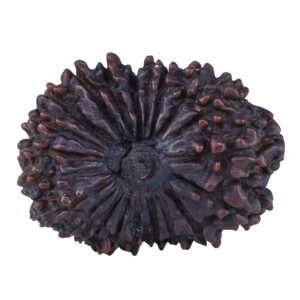
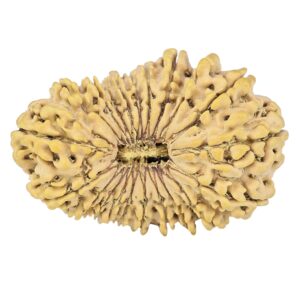
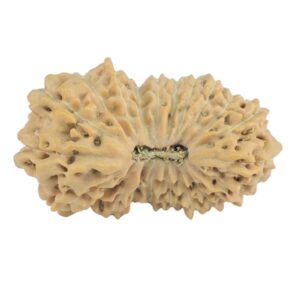
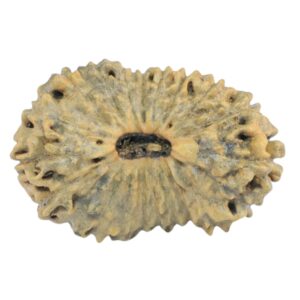
21 Mukhi Rudraksha 34.2mm 7.62gm
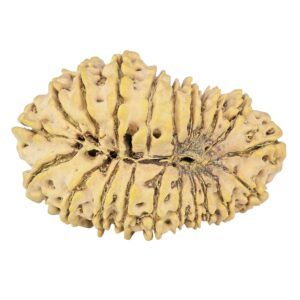
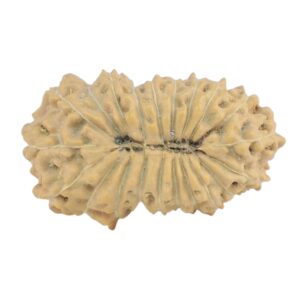
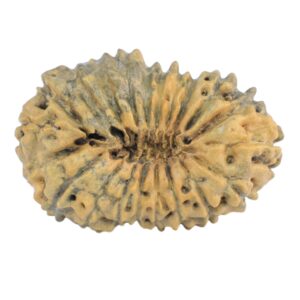
4.00 out of 5Certification Number: DCL/2026/A/0941X Ray Number: 500921 Mukhi Rudraksha 32.1mm 4gm – Origin: Nepal
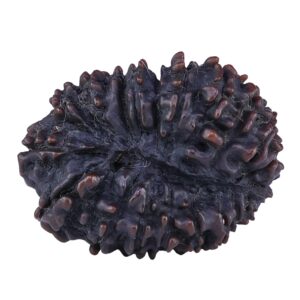
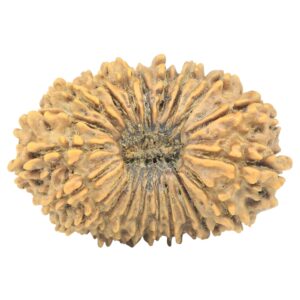
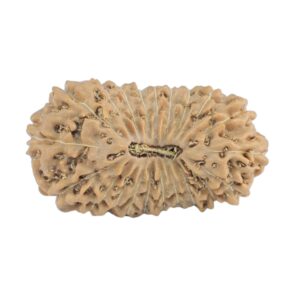
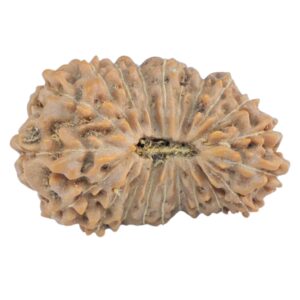
₹65,00,0005.00 out of 5Certification Number: DCL/2026/A/0947X Ray Number: 501621 Mukhi Rudraksha 30.8mm 4.1gm
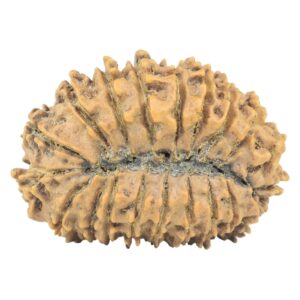
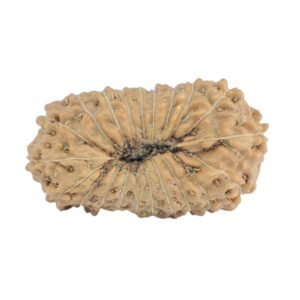
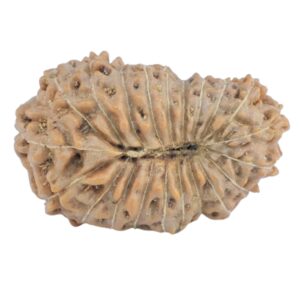
₹55,00,0000 out of 5Certification Number: DCL/2025/A/0258X Ray Number: 299121 Mukhi Rudraksha 30.3mm 4.11gm – Origin: Nepal
₹55,00,0005.00 out of 5Certification Number: DCL/2025/A/0259X Ray Number: 206121 Mukhi Rudraksha 26.7mm 3.38gm
₹15,00,0005.00 out of 5Certification Number: DCL/2025/A/0251X Ray Number: 309821 Mukhi Rudraksha 26.5mm 3.27gm
₹20,00,0005.00 out of 5Certification Number: DCL/2025/A/0252X Ray Number: 309721 Mukhi Rudraksha 20.8mm 1.62gm – Origin: Indonesia
₹2,25,0004.00 out of 5Certification Number: DCL/2026/A/1550






End of content
End of content
FAQ's about 21 Mukhi Rudraksha
The 21 Mukhi Rudraksha is a Rudraksha bead with twenty-one natural mukhi lines and the rarest Rudraksha in regular circulation. Also called Ikkees Mukhi Rudraksha, it is associated with Lord Kuber, the divine treasurer, and is worn for wealth, authority and protection.
The 21 Mukhi Rudraksha is traditionally worn for wealth and abundance, business growth, authority and protection of what has already been built. It is believed to guard against the evil eye, support presence and charisma, and steady judgement in large decisions.
A Rudraksha tree produces mostly 5 Mukhi seeds, and occurrence falls sharply as the mukhi count rises. A large Nepali bead with twenty-one clean, countable lines may appear only a handful of times in a season across the whole trade. That scarcity sets the price.
It is the bead most closely associated with wealth in Rudraksha tradition, because of its link with Lord Kuber. It is traditionally worn for accumulation and for protecting what is already built, alongside sound decisions and effort not as a substitute for either.
All twenty-one lines must run unbroken from the top hole to the bottom hole and be clearly countable. Watch for carved lines added to a lower-mukhi bead, heavy polish and composite seams. On a 21 Mukhi an X-ray is not optional it is the only reliable way to count the internal compartments.
Thursday is traditionally preferred. Monday, a Purnima, Mahashivratri and Dhanteras also suit, and Dhanteras especially, being the day of Kuber puja. Wear it in the early morning after a bath, facing east, after chanting the mantra 108 times.