5 Mukhi Rudraksha
Buy Original 5 Mukhi Rudraksha Online
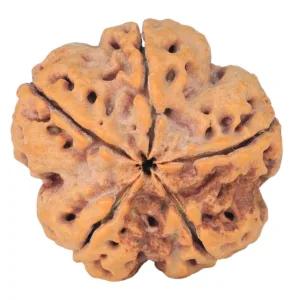
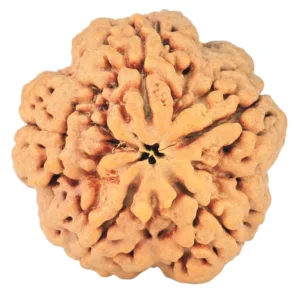
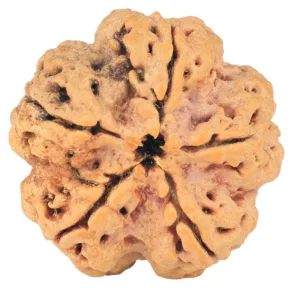
The 5 Mukhi Rudraksha is a five-faced seed of the Elaeocarpus ganitrus tree, associated with Lord Kalagni Rudra, a form of Lord Shiva, with Jupiter (Guru) as its ruling planet. Also called Panchmukhi Rudraksha, it is the most common Rudraksha and is worn for peace of mind, focus and daily spiritual practice. It is the bead most often recommended to a first-time wearer. Every 5 Mukhi Rudraksha below is a Nepali bead, individually photographed, lab-certified and X-ray verified before dispatch. Each listing shows its own certificate number and X-ray number, along with size in millimetres and weight in grams, so you know exactly which bead is reaching you. Sizes range from 11.8 mm to 32.1 mm across 81 beads
What is 5 Mukhi Rudraksha?
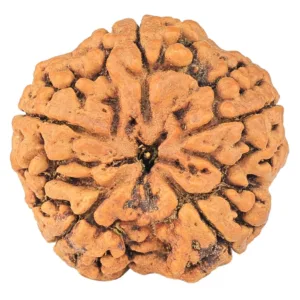
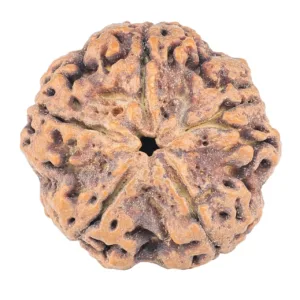
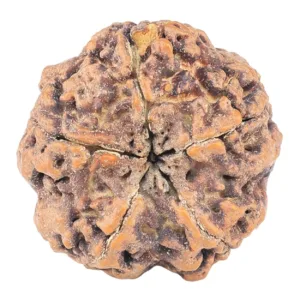
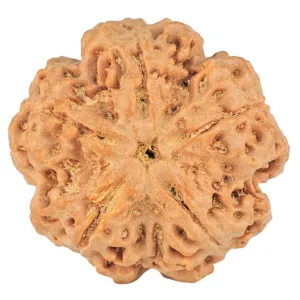
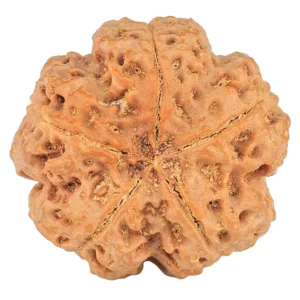
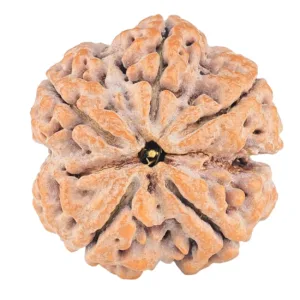
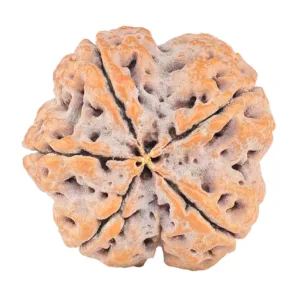
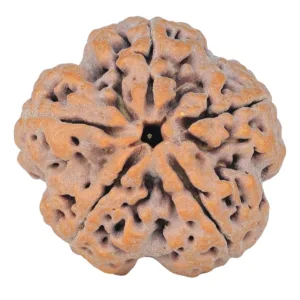
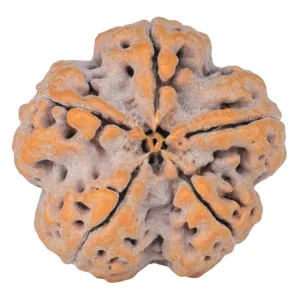
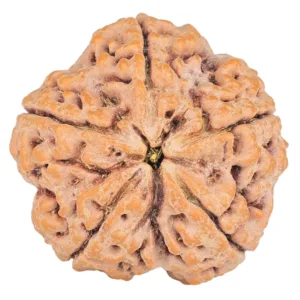
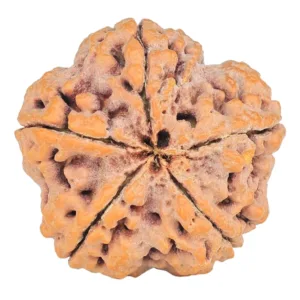
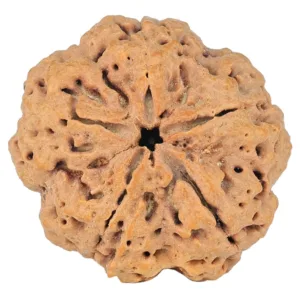
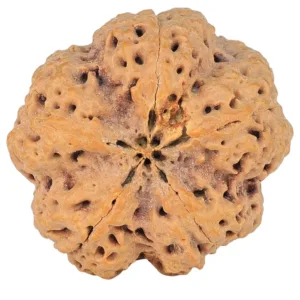
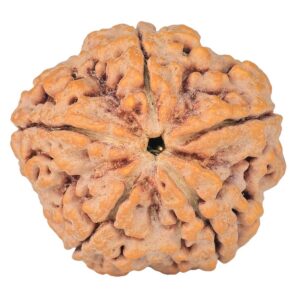
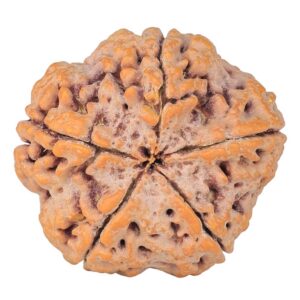
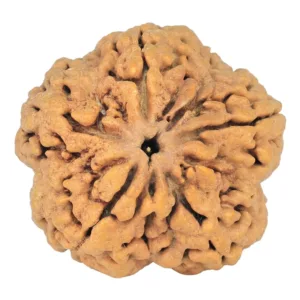
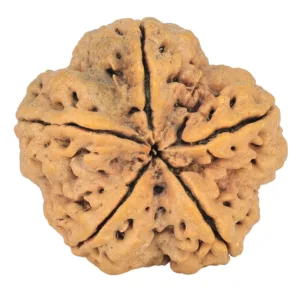
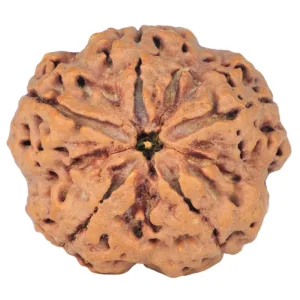
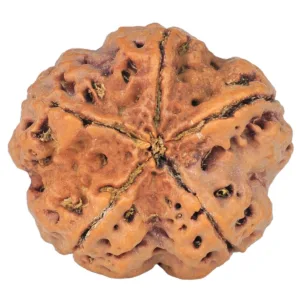
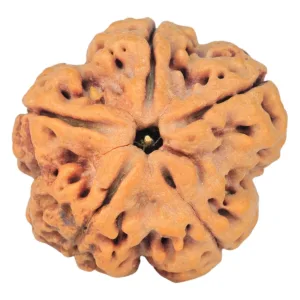
A Rudraksha bead carries natural clefts, called mukhi, that run from top to bottom. A 5 Mukhi Rudraksha has five such lines formed naturally as the seed grows on the tree. It is the most abundant Rudraksha, which is why it is also the most affordable while remaining spiritually significant.
The five faces represent Lord Kalagni Rudra, a form of Lord Shiva, and in tradition the five elements and the five faces of Shiva. Its ruling planet is Jupiter, the planet of wisdom, learning and guidance, which is why the 5 Mukhi is linked with clear thinking and steady study rather than with any single material goal.
Because its energy is considered gentle and balanced, the 5 Mukhi Rudraksha is the one bead traditional practice allows almost anyone to wear, at any age, without special rules. This is also why a japa mala is usually strung from 5 Mukhi beads, and why it is the usual first Rudraksha.


What are the Benefits of 5 Mukhi Rudraksha?
- Peace of mind — Carries the calm energy of Lord Shiva, so it is worn to settle a restless or overthinking mind.
- Emotional balance — Chosen by people who react quickly under pressure or carry constant low-level stress.
- Focus and concentration — Widely worn by students and anyone who has to hold attention on one task for long periods.
- Support in meditation and japa — A 108-bead mala is traditionally strung from 5 Mukhi beads for daily japa.
- Jupiter remedy — Its ruling planet is Jupiter, so it is worn when Jupiter is weak, or for guidance, learning and good counsel.
- Protection from negative energy — Considered a general protective bead for everyday wear.
- Clarity in speech — Associated with the Vishuddha (throat) chakra and honest, clear communication.
- Wisdom and learning — Jupiter governs teachers and knowledge, so it is traditionally given to students and seekers.
- Safe for daily wear — The only Rudraksha with no traditional restrictions on who may wear it or for how long.
5 Mukhi Rudraksha for Jupiter: What Astrology Says
In Vedic astrology, Jupiter (Guru or Brihaspati) is the planet of wisdom, teachers, higher learning, good judgement and expansion. A weak or afflicted Jupiter is traditionally linked with poor decisions, lack of direction, difficulty in studies, and a shortage of the right guidance at the right time.
- The 5 Mukhi Rudraksha is the bead assigned to Jupiter, which is why it is suggested in these situations:
- When Jupiter is weak, debilitated or badly placed in the birth chart
- During a Jupiter mahadasha or antardasha
- In Guru Chandal yoga, where Jupiter is conjunct Rahu or Ketu
- For Punarvasu, Vishakha and Purva Bhadrapada nakshatra natives, whose ruling planet is Jupiter
- For students, teachers, advisors and anyone whose work depends on judgement
Because it has no traditional restrictions, the 5 Mukhi is also the bead usually suggested to someone who wants to start wearing Rudraksha but has not had their chart read yet. A consultation is still useful before adding higher mukhi beads.
Who Should Wear 5 Mukhi Rudraksha?
The 5 Mukhi Rudraksha can be worn by anyone. Traditional practice places no restriction of age, gender, caste or horoscope on this bead, which is why it is the usual first Rudraksha and the standard bead for a japa mala.
It is most often chosen by students preparing for exams, working professionals under daily pressure, meditators and spiritual practitioners at any level, people who overthink or sleep poorly, and anyone who wants to start wearing Rudraksha without a chart consultation. It is also commonly gifted to children and elders for the same reason.
5 Mukhi Rudraksha Price: What Decides the Cost
The 5 Mukhi is the most affordable Rudraksha because it is the most abundant. Even so, price varies widely, and it depends on six things:
- Origin — Nepali beads cost several times more than Indonesian (Java) beads of the same mukhi.
- Size — a 32 mm Nepali bead is far rarer than a 12 mm bead, and priced accordingly.
- Weight and density — a heavier, solid bead is valued more than a light or hollow one.
- Clarity of the mukhi lines — five deep, unbroken, naturally uneven lines command a premium.
- Surface condition — no cracks, no insect holes, no repair work and no heavy polish.
- Certification — a lab certificate with a unique number and an X-ray number adds verifiable value.
How to Identify Original 5 Mukhi Rudraksha
- Count the lines in daylight. There must be exactly five natural clefts running unbroken from the top hole to the bottom hole.
- Look for natural unevenness. Real mukhi lines are not perfectly symmetrical. Five evenly spaced, identical lines are a warning sign, not a mark of quality.
- Watch for heavy polish. A glossy, plastic-smooth finish is often used to hide carved lines. An original bead has a slightly rough natural texture.
- Check the mukhi joints. On a real bead the lines meet the top and bottom naturally. Glued or joined beads show a seam.
- Ask for the X-ray number. An X-ray shows internal compartments; an original 5 Mukhi has five compartments, and a fake or plugged bead shows up clearly.
- Ask for a lab certificate with a unique number that you can match to the exact bead you receive, not a generic printout.
- Be careful with very low prices. A large Nepali 5 Mukhi bead still costs thousands. A large bead at a few hundred rupees is almost always Indonesian sold as Nepali.
How to Wear 5 Mukhi Rudraksha: Day, Method and Mantra
- Choose the day. Monday is the day most widely followed, as every Rudraksha belongs to Lord Shiva. Thursday also suits, being Jupiter’s day. Shravan month and Mahashivratri are considered especially auspicious.
- Bathe and sit clean. Begin in the morning after a bath, facing east, in a clean and quiet place.
- Cleanse the bead. Rinse it in clean water, then in raw cow’s milk or Ganga jal if available, rinse again and wipe dry. A light touch of pure ghee or sandalwood paste is used in some traditions.
- Energise it. Place the bead before a Shiva lingam or an image of Lord Shiva, offer bilva leaves, flowers and incense, and chant the beej mantra Om Hreem Namah 108 times. Om Namah Shivaya may be chanted as well.
- Wear it. Wear it as a pendant on a red or yellow cotton or silk thread, or capped in silver, gold or panchdhatu. A mala is worn around the neck or used for japa.
- Keep it on. The 5 Mukhi can be worn continuously. Remove it during oil massage, chemical hair treatment or any work where it can be soiled or struck.
- Maintain the practice. Chant the mantra briefly every morning. Consistency matters more than an elaborate ritual.
How to Choose the Right 5 Mukhi Rudraksha Mala
- Bead count — a traditional japa mala has 108 beads plus one guru bead. Shorter malas of 27 or 54 beads are also used.
- Size consistency — beads should be uniform so the mala sits evenly and is comfortable to wear or roll.
- Stringing quality — durable thread that will not fray, knotted between beads on better malas.
- Origin — Nepali beads are larger and denser; Indonesian beads keep a 108-bead mala light enough for daily japa.
- Certification — ask what is certified: the individual beads, or the mala as a whole.
Care, Precautions and Who Should Avoid It
- Keep the bead clean and dry, and wipe it with a soft cloth. Apply a drop of pure mustard or sesame oil every few months so the surface does not dry out and crack.
- Remove it before an oil massage, a swimming pool, a salon chemical treatment or heavy physical work where it can be hit.
- Do not share your bead. A Rudraksha is worn as a personal item.
- Traditional practice advises removing it, or following your own family custom, at cremation grounds and during periods of ritual impurity.
- Store it on a clean cloth or in a wooden or silver box, not loose in a drawer with metal.
- Some families follow the custom of removing it while sleeping or eating non-vegetarian food. Both practices vary by tradition, and neither is a rule for the 5 Mukhi.
- Who should avoid it: traditional practice places no restriction on the 5 Mukhi Rudraksha. It is considered suitable for all ages and for both men and women. If you have any medical condition, treat Rudraksha as a practice alongside medical care, never instead of it.
Why Buy 5 Mukhi Rudraksha from Rudraksha Sanskar?
- X-ray number on every bead — not just a certificate, an actual X-ray reference you can match to your bead.
- Nepali origin only on this page — all 81 loose beads are sourced from Nepal.
- Lab certificate with a unique number for every bead, matched to the exact piece you receive.
- Actual photographs of the exact bead, with its size in millimetres and weight in grams listed.
- Affordable certified beads starting from ₹[lowest], so a genuine Nepali bead is an easy first purchase.
- Available as loose beads, malas, bracelets and pendants so you can start in whatever form suits you.
- Guidance before purchase — talk to us about size, budget and whether a mala or a single bead suits your practice.
- Secure packaging and tracked delivery across India, with support after delivery.
Still unsure which Rudraksha is right for you? Get a FREE Rudraksha consultation from our experts.
Showing 1–12 of 63 results
5 Mukhi Rudraksha 32.1mm 8.83gm
₹7,2505.00 out of 5Certification Number: DCL/2026/A/3514X Ray Number: 39615 Mukhi Rudraksha 31.5mm 8.72gm
₹6,2500 out of 5Certification Number: DCL/2026/A/3518X Ray Number: 62545 Mukhi Rudraksha 31.2mm 8.91gm
₹5,2504.00 out of 5Certification Number: DCL/2026/A/3515X Ray Number: 61225 Mukhi Rudraksha 31.1mm 9.64gm
₹5,3500 out of 5Certification Number: DCL/2026/A/3519X Ray Number: 61695 Mukhi Rudraksha 30mm 9.43gm
₹3,3505.00 out of 5Certification Number: DCL/2026/A/3541X Ray Number: 61845 Mukhi Rudraksha 30mm 9.12gm
₹3,7500 out of 5Certification Number: DCL/2026/A/3531X Ray Number: 61555 Mukhi Rudraksha 30mm 8.99gm
₹3,7500 out of 5Certification Number: DCL/2026/A/3686X Ray Number: 62555 Mukhi Rudraksha 30mm 8.14gm
₹3,7505.00 out of 5Certification Number: DCL/2026/A/3559X Ray Number: 61395 Mukhi Rudraksha 30mm 8.08gm
₹3,7500 out of 5Certification Number: DCL/2026/A/3685X Ray Number: 62525 Mukhi Rudraksha 30mm 7.36gm
₹3,7500 out of 5Certification Number: DCL/2026/A/3557X Ray Number: 61335 Mukhi Rudraksha 30.8mm 8.38gm
₹5,3505.00 out of 5Certification Number: DCL/2026/A/3542X Ray Number: 61655 Mukhi Rudraksha 30.3mm 9.63gm
₹3,7505.00 out of 5Certification Number: DCL/2026/A/3543X Ray Number: 6261
End of content
End of content
FAQ's about 5 Mukhi Rudraksha
The 5 Mukhi Rudraksha is a Rudraksha bead with five natural mukhi lines on its surface. Also called Panchmukhi Rudraksha, it is associated with Lord Kalagni Rudra, a form of Lord Shiva, and its ruling planet is Jupiter. It is the most common and most widely worn Rudraksha.
The 5 Mukhi Rudraksha is traditionally worn for peace of mind, emotional balance and focus. It is believed to support meditation and japa, help students hold concentration, protect against negative energy, and strengthen a weak Jupiter in the birth chart.
The 5 Mukhi Rudraksha is ruled by Lord Kalagni Rudra, a form of Lord Shiva, and its ruling planet is Jupiter (Guru or Brihaspati). Because Jupiter governs wisdom, learning and good judgement, this bead is often suggested to students and to anyone with a weak Jupiter.
Yes. Traditional practice places no restriction of age, gender or horoscope on the 5 Mukhi Rudraksha. It is considered the one bead anyone can wear without a chart consultation, which is why it is the usual first Rudraksha and is commonly given to children and elders.
Monday is the day most widely followed, as every Rudraksha belongs to Lord Shiva. Thursday also suits, being Jupiter’s day. Wear it in the morning after a bath, facing east, after chanting the beej mantra Om Hreem Namah 108 times.
An original 5 Mukhi Rudraksha has five natural mukhi lines that are uneven rather than perfectly symmetrical, and a slightly rough surface. Heavy polish and lines that look identical are warning signs. Ask for an X-ray number and a lab certificate whose unique number matches your bead.