
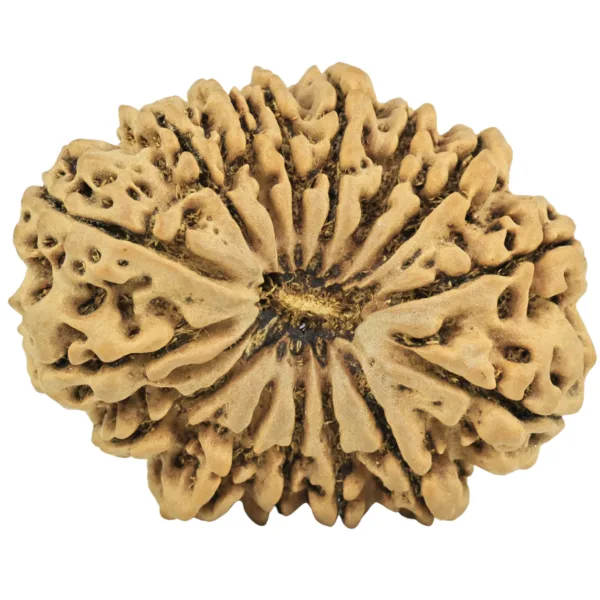
Showing 1–12 of 90 results
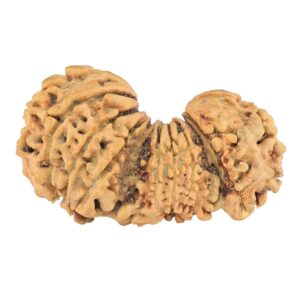
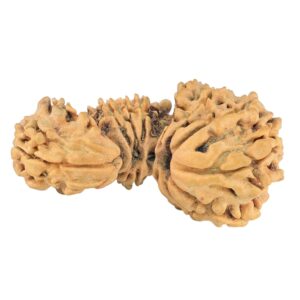


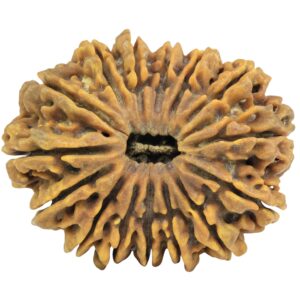





End of content
End of content
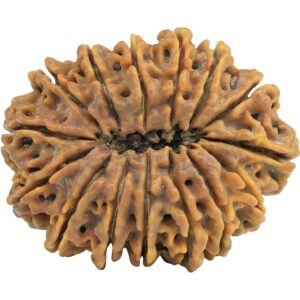
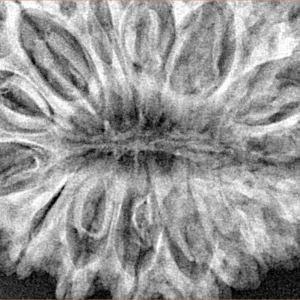
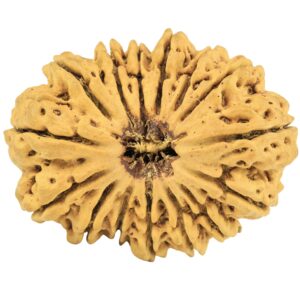
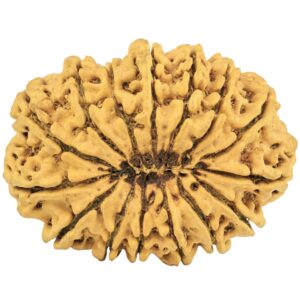
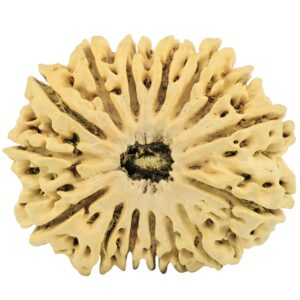
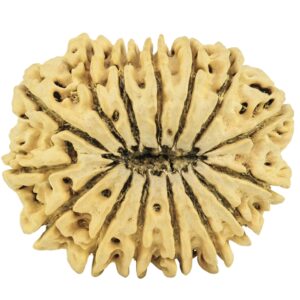
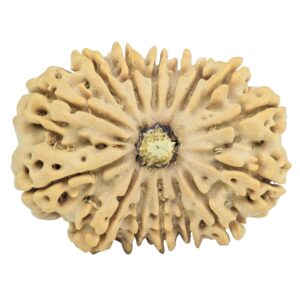
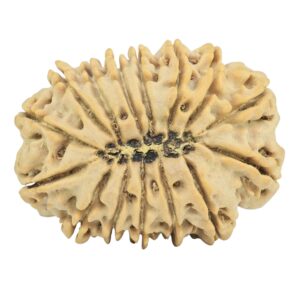
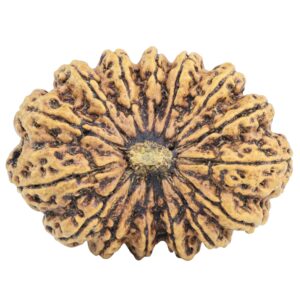
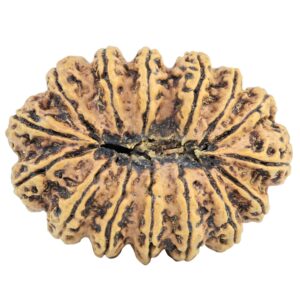
The 15 Mukhi Rudraksha is a fifteen-faced bead of the Elaeocarpus ganitrus tree, traditionally associated with Lord Pashupatinath, a compassionate form of Lord Shiva, and linked to the planet Mercury (Budh) and the Anahata or heart chakra. Also called Pandrah Mukhi Rudraksha, it is worn for emotional healing, forgiveness and harmony in relationships. Its beej mantra is Om Hreem Namah. A genuine 15 Mukhi Rudraksha has fifteen unbroken natural mukhi lines running from crown to base, and should always be supplied with a laboratory certificate and X-ray verification. At Rudraksha Sanskar, every bead is individually numbered, lab certified and X-ray checked before dispatch.
A Rudraksha is the seed of the Elaeocarpus ganitrus tree. Natural clefts run down its surface from crown to base, and the number of these clefts, called the mukhi, determines which deity and planetary energy the bead is traditionally linked to. A 15 Mukhi Rudraksha carries fifteen such natural lines.
The fifteen-faced bead is attributed to Lord Pashupatinath, the form of Lord Shiva worshipped as the compassionate lord of all beings, whose principal shrine stands on the Bagmati river in Kathmandu. Where lower-mukhi beads are chosen for protection or focus, the 15 Mukhi is chosen for the heart: for releasing emotional weight a person has carried too long, for forgiveness, and for the steadiness that lets someone care for others without being drained by it.
In classical Rudraksha tradition, described in the Shiva Purana and the Padma Purana, beads are ranked not by size but by mukhi count, and each count carries its own deity and planetary rulership. The fifteen-faced bead sits among the higher-mukhi varieties valued for emotional and spiritual maturity rather than for material gain.
It is linked with the Anahata or heart chakra, the centre traditionally associated with love, empathy and generosity, and with the planet Mercury (Budh), which governs clarity of thought, communication and judgement. That pairing is the point of the bead: emotional turbulence damages clear thinking first, and the 15 Mukhi is worn to steady both together.
People who feel emotionally exhausted, heartbroken, unable to forgive, or disconnected from their own sense of peace are the ones who traditionally turn to this bead. It is a bead of repair rather than acquisition.
These benefits are drawn from Rudraksha tradition and the reported experience of wearers. They are not medical claims. Rudraksha is a spiritual practice, worn alongside professional medical care and never in place of it.
The 15 Mukhi Rudraksha suits people whose work or life runs through their emotions: those recovering from grief, heartbreak or a long period of stress; couples wanting to rebuild harmony at home; counsellors, therapists, doctors, nurses and caregivers who absorb other people’s distress; teachers and HR professionals; and spiritual seekers devoted to Lord Shiva. Both men and women can wear it.
It is not usually the first Rudraksha someone should buy. If you are new to Rudraksha, a 5 Mukhi Rudraksha or a guided combination is the better starting point. You can also use our Rudraksha calculator or book a consultation, so that the bead is matched to your chart and your intent rather than to a guess.
A certified 15 Mukhi Rudraksha at Rudraksha Sanskar currently ranges from Rs 2,850 to Rs 5,00,000, across 92 beads in stock. Five things set the price:
Still unsure which Rudraksha is right for you? Get a FREE Rudraksha consultation from our experts.
Showing 1–12 of 90 results
End of content
End of content
The 15 Mukhi Rudraksha is a fifteen-faced bead of the Elaeocarpus ganitrus tree, traditionally associated with Lord Pashupatinath, a compassionate form of Lord Shiva. It is also called Pandrah Mukhi Rudraksha and is worn for emotional healing, relationship harmony and heart-centred balance.
It is traditionally believed to support emotional healing, the release of past pain, forgiveness, compassion and harmony in relationships. Wearers also associate it with a calmer mind under stress and steadier decision-making. These are traditional beliefs, not medical claims.
The beej mantra of the 15 Mukhi Rudraksha is Om Hreem Namah. It is traditionally chanted 108 times, or in multiples of 108, when the bead is first worn, and briefly each morning after that. Some traditions also use Om Namah Shivaya.
Wear it on a Monday morning after bathing, facing east. Cleanse the bead in clean water and raw cow’s milk, offer it before a Shiva lingam with flowers and incense, chant Om Hreem Namah 108 times, then wear it as a pendant on a red or white thread, or capped in silver, gold or panchdhatu, so that it rests near the heart.
An original bead has exactly fifteen natural, unbroken mukhi lines running from crown to base, with irregular depth rather than machine-perfect symmetry. Ask for an X-ray report and a laboratory certificate carrying a unique number for that specific bead. Avoid artificial cuts, heavy polish and sellers without authenticity assurance.
Don't have an account yet? Sign up
No items in your cart. Go on, fill it up with something you love!
Start Shopping Now
Namaste 🙏 Welcome to Rudraksha Sanskar
Need help choosing authentic Rudraksha? Call / WhatsApp us on
+91 70783 00563
Get personal guidance for authentic Rudraksha selection. Get a free consultation here

Usually replies quickly on WhatsApp
+91 70783 00563Authentic Rudraksha guidance, product availability, order support and international shipping enquiry.
Fill your details and our team will contact you soon.
Powered by Rudraksha Sanskar
Thank you for contacting us.
Your Consultation Code is:
Please save this code for future reference.


