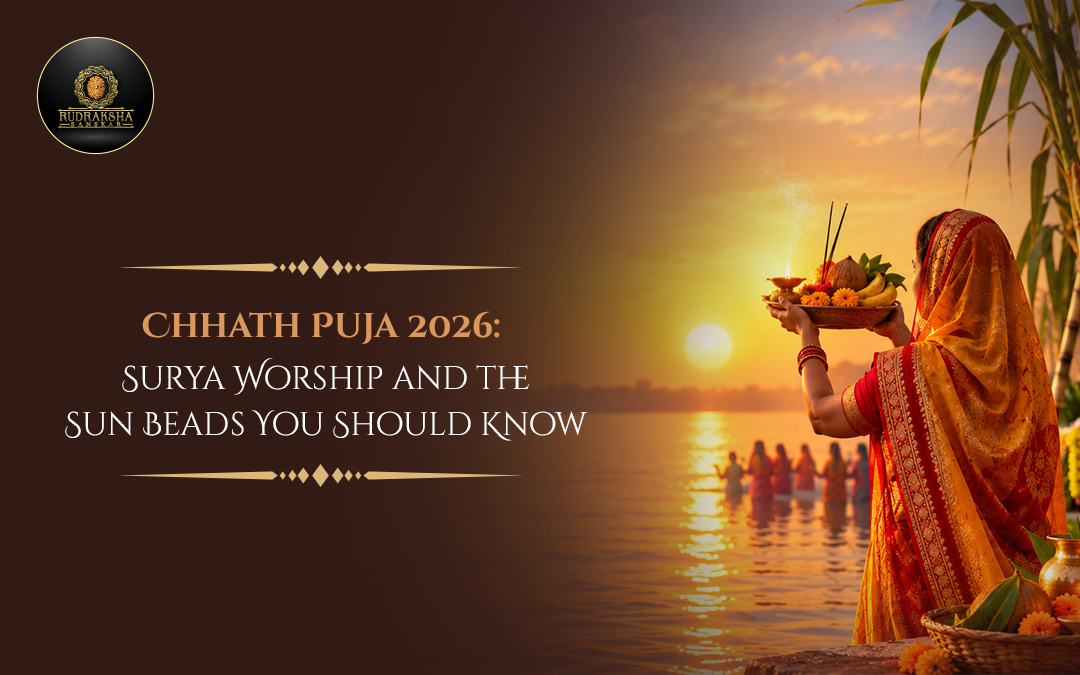
Chhath Puja is one of the most significant Hindu festivals dedicated to Lord Surya, the Sun God, and Chhathi Maiya. Celebrated with devotion, fasting and offerings to the rising and setting Sun, the festival represents gratitude, discipline and respect for nature.
For devotees interested in Rudraksha, Chhath Puja also offers an opportunity to understand beads traditionally associated with Surya.
The 12 Mukhi Rudraksha is the most directly relevant choice, while the 1 Mukhi also has solar associations in some traditions.
But are these beads part of traditional Chhath rituals? And what should you know before wearing them?
Let’s explore Chhath Puja 2026, the significance of Surya worship and the Rudraksha associated with the Sun.
When Is Chhath Puja in 2026?
Chhath Puja 2026 takes place from November 13 to November 16, with the main Sandhya Arghya on Sunday, November 15.
The four-day celebration follows this schedule:
| Date | Day | Ritual |
| November 13, Friday | Day 1 | Nahay Khay |
| November 14, Saturday | Day 2 | Kharna or Lohanda |
| November 15, Sunday | Day 3 | Sandhya Arghya |
| November 16, Monday | Day 4 | Usha Arghya and Parana |
Chhath is particularly important in Bihar, Jharkhand, eastern Uttar Pradesh and parts of Nepal.
The main offerings follow local sunset on November 15 and sunrise on November 16, so exact timings vary by location.
Why Is Lord Surya Worshipped During Chhath Puja?
Lord Surya represents the Sun, which provides the light and energy essential for life on Earth.
In Hindu traditions, Surya is associated with illumination, vitality, consistency and the passage of time.
Chhath Puja expresses gratitude for these life-sustaining qualities.
One of the festival’s distinctive features is the offering of Arghya to both the setting and rising Sun.
Sandhya Arghya honours the setting Sun, while Usha Arghya honours the rising Sun.
This practice reflects gratitude through different stages of the daily solar cycle.
Chhathi Maiya is also central to the festival, with devotees seeking blessings for family well-being and happiness.
What Happens During the Four Days of Chhath Puja?
Day 1: Nahay Khay
The festival begins with purification and the preparation of simple, traditionally prescribed food.
Devotees clean their surroundings and begin observing the discipline associated with Chhath.
Day 2: Kharna
Devotees observe a daytime fast and prepare offerings, commonly including jaggery-based kheer and roti.
After the evening offering and meal, many begin the demanding nirjala fast.
Day 3: Sandhya Arghya
Families gather near rivers, ponds or designated water bodies to offer prayers to the setting Sun.
Traditional offerings may include thekua, fruits, sugarcane and coconut.
Day 4: Usha Arghya
The final offering is made to the rising Sun.
After completing the morning prayers, devotees conclude the fast according to their family traditions.
The prolonged fasting involved can be physically demanding and may not be appropriate for everyone, particularly people with medical conditions or special nutritional needs.
Which Rudraksha Is Associated With Lord Surya?
12 Mukhi Rudraksha: The Primary Surya-Associated Bead
The 12 Mukhi Rudraksha is traditionally associated with Lord Surya.
It has twelve natural facial divisions, known as Mukhi, running along its surface.
In Rudraksha traditions, this bead represents qualities such as:
- Confidence and self-expression
- Leadership and responsibility
- Discipline and consistency
- Radiance and clarity
- Personal determination
Its association with Surya makes it especially relevant when discussing Sun-related devotional practices.
However, these qualities are spiritual and symbolic associations, not scientifically demonstrated effects of wearing the bead.
1 Mukhi Rudraksha: A Rare Bead With Varying Associations
The 1 Mukhi Rudraksha is primarily associated with Lord Shiva in many Rudraksha traditions.
Some contemporary interpretations also connect it with Surya through astrological associations.
Because these interpretations vary, it should not be presented as the universally recognised Sun bead.
The 1 Mukhi is also rare and requires careful authentication.
For someone specifically interested in Surya symbolism, 12 Mukhi is the clearer traditional choice.
Is Rudraksha Part of Traditional Chhath Puja?
Rudraksha is not a required component of the established Chhath Puja rituals.
The festival centres on fasting, purity, offerings, family participation and worship of Surya Dev and Chhathi Maiya.
Traditional items such as bamboo baskets, fruits, thekua and water offerings hold far greater importance in the observance.
Some devotees may independently wear Rudraksha as part of their regular spiritual practice.
However, purchasing or wearing a particular Mukhi should not be described as a necessary Chhath ritual.
Respecting the festival’s established customs is more important than introducing additional practices.
How Can You Include 12 Mukhi Rudraksha in Your Surya Devotion?
If you already follow Surya worship and wish to wear a 12 Mukhi Rudraksha, consider a simple personal practice outside the prescribed Chhath rituals.
Step 1: Choose an authentic bead with twelve natural Mukhi.
Step 2: Keep it clean and store it respectfully.
Step 3: Offer your regular prayers to Lord Surya.
A commonly recited Surya mantra is:
ॐ सूर्याय नमः
Om Suryaya Namah.
Step 4: Wear the Rudraksha comfortably as a pendant or necklace, if appropriate to your tradition.
Step 5: Use its symbolism as a personal reminder of discipline, gratitude and consistency.
There is no universal requirement to perform a special Rudraksha consecration during Chhath Puja.
How to Identify an Original 12 Mukhi Rudraksha
Before purchasing a 12 Mukhi, check the specimen carefully.
Look for twelve naturally formed facial divisions rather than artificially carved lines.
Request clear photographs of the actual bead from multiple angles.
Review the seller’s authenticity documentation and ensure it corresponds to the specimen being sold.
Be cautious of exaggerated claims about guaranteed fame, professional success or physical health benefits.
You can also read the guide to identifying an original Rudraksha before making a purchase.
Celebrate Chhath Puja With Gratitude and Devotion
Chhath Puja 2026 is a celebration of faith, discipline, nature and gratitude toward Lord Surya.
The 12 Mukhi Rudraksha carries a meaningful traditional connection with the Sun, making it relevant for devotees interested in Surya-related symbolism.
However, Chhath Puja does not require any particular Rudraksha. Its central traditions remain the offerings to the setting and rising Sun.
If you plan to buy rudraksha online, prioritise authenticity and understand the religious significance of your chosen bead. The most meaningful lesson of Surya worship is simple: approach each new day with gratitude, consistency and purpose.
FAQs
Chhath Puja runs from November 13 to November 16, 2026. Sandhya Arghya falls on November 15, followed by Usha Arghya on November 16.
The 12 Mukhi Rudraksha is traditionally associated with Lord Surya and is the clearest choice for devotees interested in solar symbolism.
Yes, according to your personal or family tradition. However, wearing Rudraksha is not a required Chhath Puja ritual.
Some contemporary astrological interpretations associate it with Surya, but its primary religious association in many traditions is Lord Shiva.
These are commonly discussed traditional associations. There is no reliable scientific evidence that wearing the bead directly improves health or confidence.