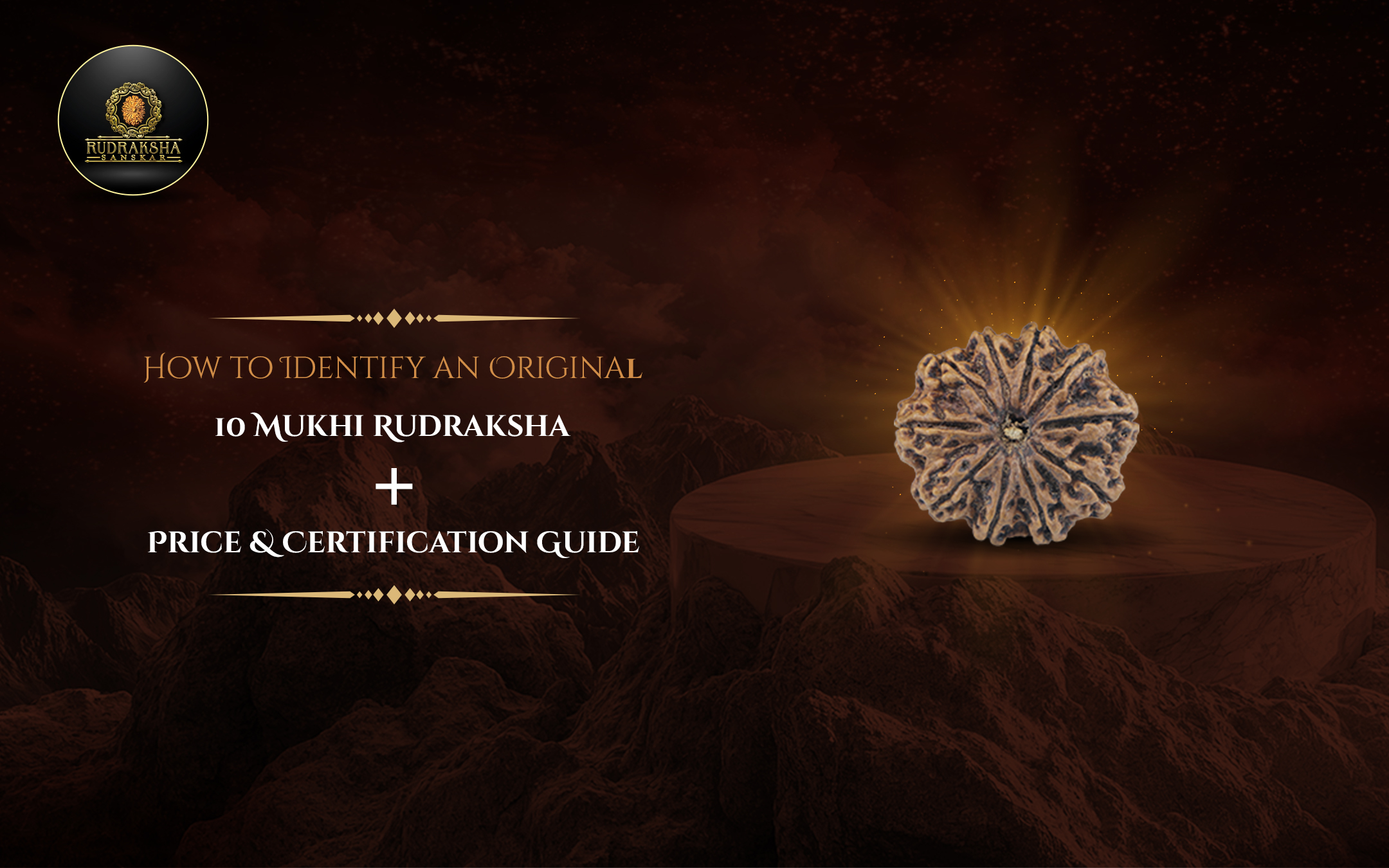
The 10 Mukhi Rudraksha is one of the most popular Rudraksha beads for protection and mental stability. Because it is widely recommended, it is also widely faked. Many buyers search for it online with questions like “10 Mukhi Rudraksha original price,” “how to check if it’s real,” or “should it be certified.” These are smart questions, because authenticity is the only factor that decides whether your purchase is meaningful or risky.
If you plan to buy Rudraksha online, this is the one blog that protects you from the biggest mistake: buying a carved or chemically treated bead. A 10 Mukhi Rudraksha may look genuine in a product photo, but the details matter. Understanding how to identify an original bead and how pricing works will help you buy authentic Rudraksha online with confidence.
Why 10 Mukhi Rudraksha Is Commonly Faked
The 10 Mukhi Rudraksha is in a high-demand category because it is marketed as a protection bead. Protection-focused products attract two types of buyers: those who are genuinely seeking spiritual grounding, and those who buy out of fear.
This demand creates a perfect environment for counterfeit products. Fake 10 Mukhi beads are common because the mukhi lines can be artificially carved into other beads, and most buyers don’t know how natural lines should look.
Some sellers also polish the bead heavily to make it look “premium.” But in Rudraksha, too much polish is often a red flag.
What a Genuine 10 Mukhi Rudraksha Should Look Like
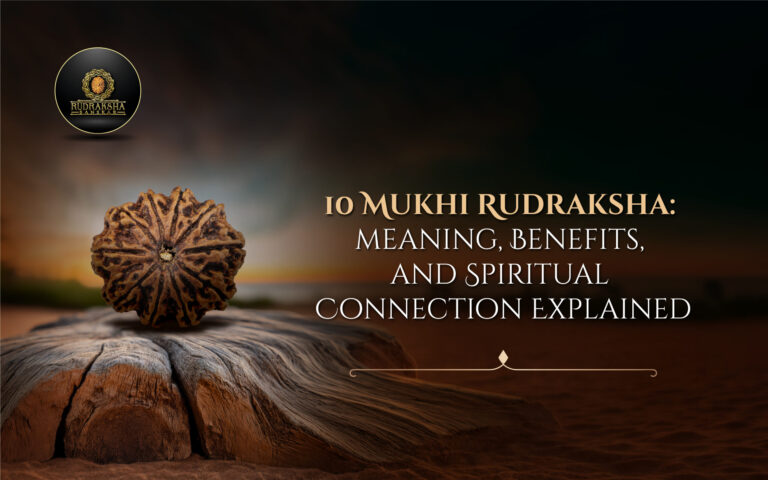
A genuine 10 Mukhi Rudraksha has ten naturally formed vertical clefts running from the top to the bottom. These lines are not carved. They are formed organically.
The first thing buyers should understand is that natural does not mean perfect. Real Rudraksha beads often look slightly uneven. Mukhi lines may vary in depth. The surface may have pores and natural texture. These are good signs.
A genuine 10 Mukhi Rudraksha usually has a matte or slightly rough appearance. If it looks glossy, extremely smooth, or perfectly symmetrical, it should be questioned.
How to Identify an Original 10 Mukhi Rudraksha (Practical Buyer Checks)
There are a few strong authenticity checks that buyers can use, especially when buying online. These checks do not require advanced tools. They require careful observation and a mindset that does not rush.
Mukhi Line Continuity Matters
The mukhi lines should run naturally from one end of the bead to the other. Artificially carved lines often look shallow, sharp, or too uniform.
Natural mukhi lines are rarely identical. If the lines look perfectly equal, perfectly spaced, and overly clean, it can be a sign of carving.
Surface Pores Are a Strong Authenticity Sign
Rudraksha beads have natural pores. These pores are part of their organic formation. Over-polished or chemically treated beads often lose visible pores and start looking like wooden beads or polished seeds.
When you buy Rudraksha online, always zoom in on the bead photos. If the surface looks unnaturally smooth, that is not a good sign.
Natural Texture Is More Trustworthy Than Gloss
A real Rudraksha bead does not look like a glossy product. It looks organic. Many fake sellers try to make Rudraksha look “luxury” by polishing it. But excessive shine is often a warning sign.
A genuine 10 Mukhi Rudraksha should look natural, textured, and earthy.
Why the Water Test Is Not Reliable
Many buyers still rely on the water test. The idea is that real Rudraksha sinks and fake Rudraksha floats. This is not a reliable method.
Genuine Rudraksha beads may float or sink depending on moisture content, density, and internal structure. Fake beads may also sink if they are heavy or treated.
The water test is not a professional authenticity check. It should never be the deciding factor, especially for a 10 Mukhi Rudraksha.
The Role of Lab Certification (And When You Should Demand It)
Certification is not a marketing add-on. For online purchases, it is one of the strongest trust signals.
A proper lab report helps confirm:
- mukhi count
- natural formation
- absence of artificial carving
- internal structure consistency
For 10 Mukhi Rudraksha, certification is strongly recommended because carving is common.
If you are planning to buy authentic Rudraksha online, certification becomes even more important because you cannot physically inspect the bead before purchase.
Understanding 10 Mukhi Rudraksha Price: What Affects Cost?
Many buyers search for “10 Mukhi Rudraksha original price” expecting a fixed number. But Rudraksha pricing does not work like that. Prices vary based on quality factors, origin, and certification.
A genuine 10 Mukhi Rudraksha price is usually influenced by:
the clarity of mukhi lines
size and weight
overall bead quality
origin (Nepal vs Indonesia)
lab certification
seller credibility
The key point is this: if the price is extremely low, it often indicates a carved or fake bead. If the price is extremely high without certification, it may indicate marketing exaggeration.
A reasonable price range should always be supported by proof.
Nepal vs Indonesia 10 Mukhi Rudraksha: Price and Quality Differences
Many buyers see sellers offering Nepal and Indonesian beads. Both are real, but they differ in texture and typical pricing.
Nepal Rudraksha beads are often heavier, more textured, and considered more traditionally preferred. They are usually priced higher.
Indonesian Rudraksha beads are generally smaller, lighter, and smoother. They are often priced lower but can still be authentic.
For 10 Mukhi Rudraksha, both origins can be genuine. The choice depends on preference, budget, and authenticity proof.
Red Flags When Buying 10 Mukhi Rudraksha Online
If you plan to buy Rudraksha online, these red flags should be taken seriously.
If a seller uses only stock images and not actual bead photos, it is a major warning sign. If the listing has no certification, no close-up photos, and no clear mukhi visibility, it is risky.
Another red flag is extreme claims. If a seller promises guaranteed protection from all negativity, instant removal of evil eye, or immediate success, it often indicates fear-based marketing rather than authenticity.
Finally, if the bead looks glossy and overly polished, it may be chemically treated.
Checklist Before You Buy Authentic Rudraksha Online
A buyer-friendly checklist helps reduce mistakes.
Before purchasing, ensure:
The bead has ten visible mukhi lines.
The surface has natural pores.
The bead does not look artificially polished.
You receive real images of the exact bead.
Certification is provided or available.
The seller has clear return and refund policies.
This checklist makes the buying decision safer and more confident.
Should You Buy 10 Mukhi Rudraksha Online?
Yes, you can buy it online safely, but only if you follow authenticity rules.
Online buying is convenient because it gives access to certified sellers and a wider variety of beads. But it also carries higher risk because counterfeit sellers operate aggressively online.
That is why the best approach is not to buy quickly. It is to buy carefully.
If you buy authentic Rudraksha online, the bead becomes a genuine spiritual support. If you buy without verification, it becomes a gamble.
Conclusion
The 10 Mukhi Rudraksha is valued for protection, peace, and mental stability, but its popularity makes it one of the most commonly faked beads. Identifying an original 10 Mukhi Rudraksha requires careful attention to mukhi lines, surface texture, pores, and seller transparency. The water test is unreliable, while certification is one of the strongest proof points for online buying.
If you plan to buy Rudraksha online, focus on authenticity and realistic understanding rather than price alone. When you buy authentic Rudraksha online from a trusted seller, you ensure that your purchase carries genuine spiritual and traditional value.