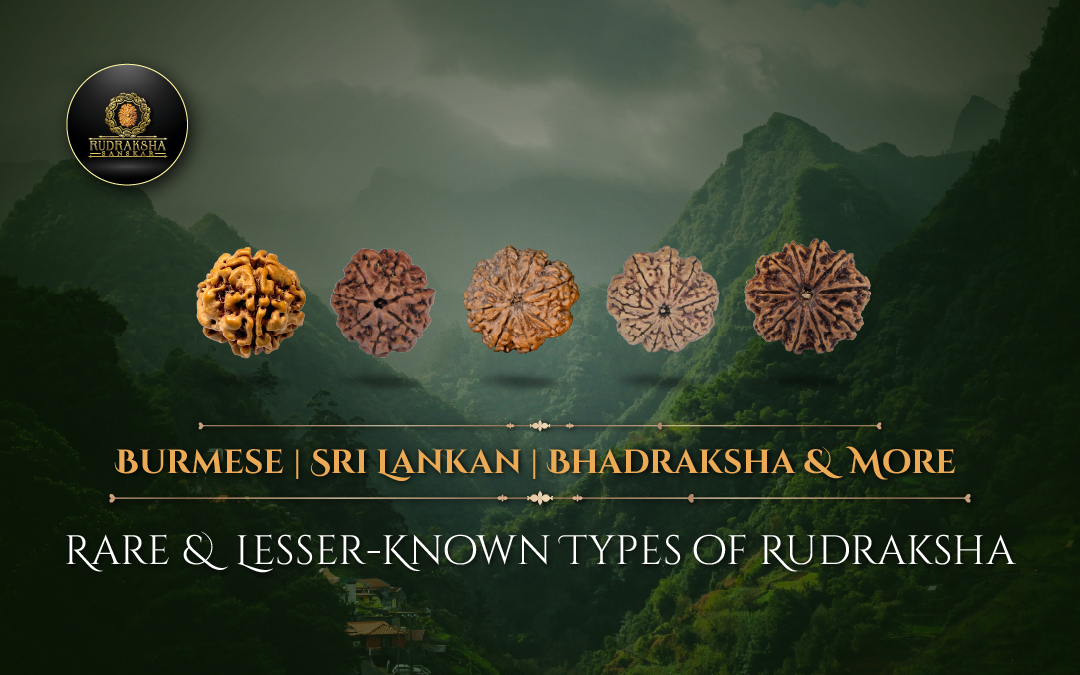
Most people are familiar with popular Rudraksha types such as Nepali, South Indian, Himalayan, and Indonesian. However, there are also rare and lesser-known Rudraksha varieties that hold cultural, spiritual, and even cautionary significance. These beads are not as widely discussed but form an important part of the broader Rudraksha tradition.
From authentic but region-specific beads like Burmese and Sri Lankan Rudraksha to inauspicious look-alikes like Bhadraksha, each type tells a different story about authenticity, energy, and usage. Understanding them can help seekers choose wisely and avoid confusion when buying Rudrakshas.
Burmese Rudraksha
Burmese Rudrakshas are found in parts of Myanmar (Burma), where the climate and soil conditions differ from those of Nepal or South India. As a result, these beads carry their own distinct traits.
- Appearance: Burmese Rudrakshas are usually medium-sized, with a surface that is slightly rougher than Indonesian beads but less bold than Nepali ones.
- Energy: Spiritually, they are said to be balanced and gentle, somewhat similar to South Indian Rudrakshas.
- Usage: They are not as widely traded internationally, making them less common in markets outside the region.
Though they hold spiritual value, Burmese Rudrakshas have not achieved the same recognition as Nepali or Himalayan varieties, largely due to limited availability and awareness.
Sri Lankan Rudraksha
Sri Lanka also produces Rudraksha beads, especially in the tropical regions of the island. These beads are often compared to South Indian Rudrakshas because of their size and surface texture.
- Appearance: Small to medium-sized, smooth, and lightweight.
- Energy: Calming and steady, suitable for beginners and daily worship.
- Usage: Commonly used in malas for mantra chanting in Sri Lankan temples.
While they may not carry the same global reputation as Nepali beads, Sri Lankan Rudrakshas are considered authentic and effective within their cultural context.
Bhadraksha: The Inauspicious Counterpart
Among rare types, Bhadraksha stands out not for its spiritual value but for its negative connotation. These are look-alike beads that resemble Rudrakshas but are considered inauspicious.
- Appearance: Bhadraksha beads often have irregular or deceptive mukhi lines that mimic Rudrakshas. They may look similar at first glance but lack the natural definition of authentic beads.
- Belief: Ancient texts describe Bhadraksha as unsuitable for worship or wearing, as they are believed to carry inauspicious energy.
- Usage: Traditionally avoided in spiritual practice.
The existence of Bhadraksha serves as a reminder that not every bead that looks like a Rudraksha is sacred. Buyers should always seek authenticity certification to avoid confusion.
Other Lesser-Known Variants
Beyond the main types, a few other regional or rare variants exist:
- Burmese and Sri Lankan Hybrids: Sometimes, beads traded across borders are mislabeled, leading to hybrids or mixed categories.
- Local Finds in Southeast Asia: In countries like Thailand or Cambodia, Rudraksha trees are occasionally found, but the beads are rare and not commonly traded.
- False or Artificial Rudraksha: Some markets also circulate artificial beads made of wood or plastic, passed off as real. These carry no spiritual value and highlight the importance of careful sourcing.
Choosing Authentic Rudraksha
With so many regional varieties and look-alikes, seekers often face confusion about what is authentic. A few simple guidelines can help:
- Check the Source: Trusted sellers with certification are always the best option.
- Examine the Mukhi Lines: Authentic Rudrakshas have clear, continuous grooves that run from one end to the other.
- Weight and Texture: Real beads feel heavier and denser than fakes.
- Regional Awareness: Know whether you are buying Nepali, South Indian, Himalayan, Indonesian, or rare variants like Burmese or Sri Lankan.
Remember: authenticity matters more than origin. Even smaller, less famous beads carry spiritual value if they are genuine.
Who Should Consider Rare Types?
- Collectors who value unique, region-specific Rudrakshas.
- Spiritual practitioners seeking alternatives when common types are not available.
- Seekers on a budget, since some rare regional beads may be more affordable than Nepali ones.
- Researchers and enthusiasts exploring the cultural breadth of Rudraksha traditions.
However, caution is advised with Bhadraksha or artificial varieties, as they are traditionally avoided in spiritual practices.
Conclusion
The world of Rudraksha is broader than just Nepali or Indonesian beads. Rare varieties like Burmese and Sri Lankan Rudraksha add cultural richness to the tradition, while warnings about Bhadraksha remind seekers to remain vigilant when choosing.
For those searching for authentic Rudraksha, rare Rudraksha beads, or guidance on inauspicious Bhadraksha, understanding these lesser-known types is essential. Whether collected for their uniqueness or worn for spiritual practice, these beads highlight the diversity and depth of Rudraksha heritage across Asia.