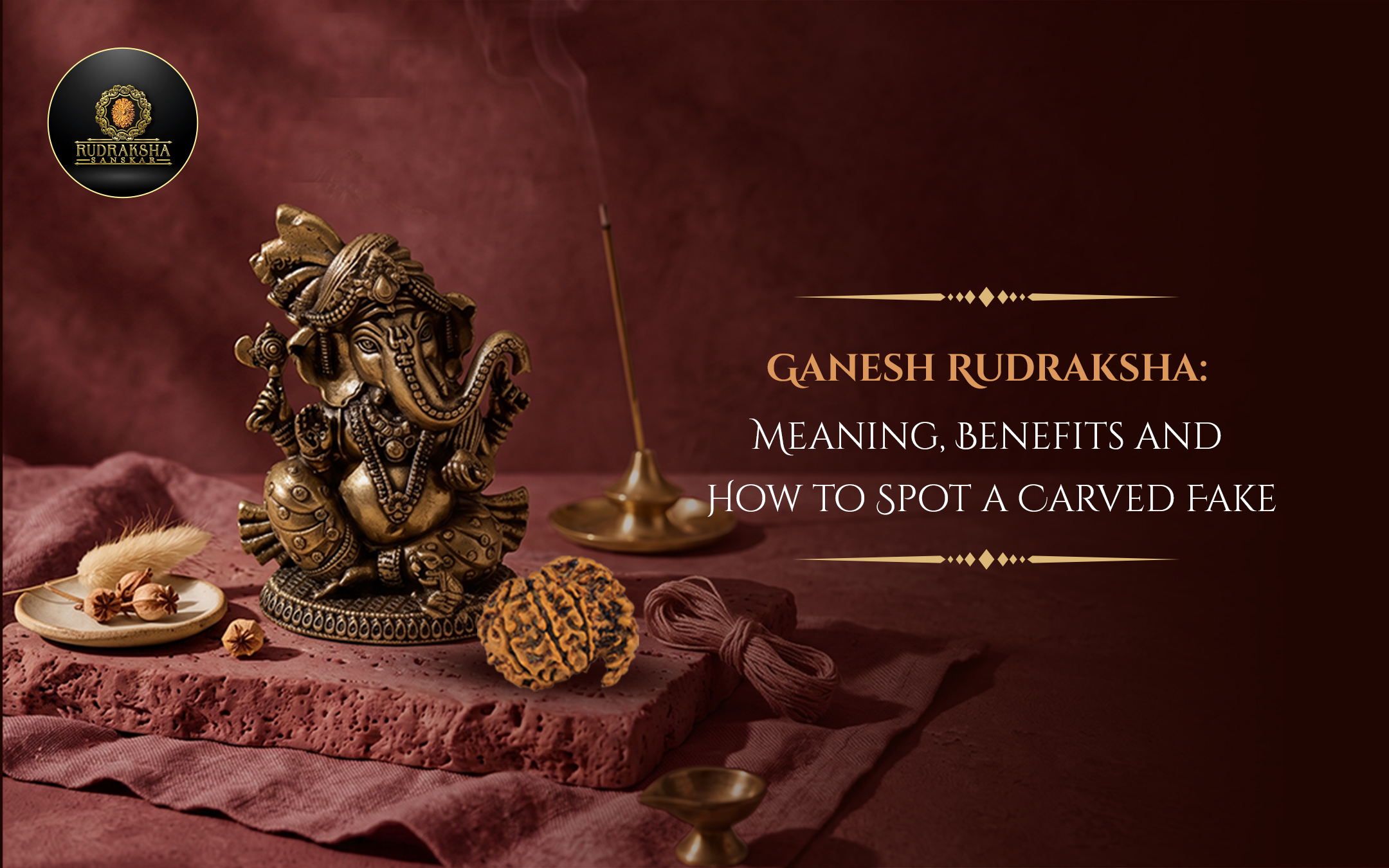
A Ganesh Rudraksha is easy to recognise in theory.
Look for the natural protrusion that resembles the trunk of Lord Ganesha.
The difficulty is knowing whether that trunk actually formed naturally.
Because Ganesh Rudraksha is valued for its unusual shape, regular Rudraksha can be carved, altered or reshaped to imitate the formation. A perfectly defined trunk may look impressive in a product photograph, but natural Rudraksha rarely grows with the neat symmetry of a manufactured object.
That makes one rule especially important:
With Ganesh Rudraksha, the trunk is not decoration. The natural formation is the identity of the bead.
Before buying one, understand what that means physically as well as spiritually.
What Is Ganesh Rudraksha?
A Ganesh Rudraksha is a naturally formed Rudraksha with a protruding section resembling the trunk of Lord Ganesha.
Unlike a standard Mukhi classification, Ganesh does not refer to one fixed number of faces.
A Ganesh formation can occur on different Mukhi Rudraksha.
For example, Rudraksha Sanskar’s current collection contains Ganesh formations identified with different underlying Mukhi, including certified 11 Mukhi Ganesh specimens.
So a bead may be described as:
- 8 Mukhi Ganesh
- 11 Mukhi Ganesh
- another Mukhi with a genuine Ganesh formation
The Mukhi tells you the natural face count.
Ganesh tells you about the additional trunk-like formation.
What Does Ganesh Rudraksha Traditionally Represent?
Lord Ganesha is traditionally worshipped before new beginnings and is associated with wisdom, intelligence and removing obstacles.
That symbolism carries into Ganesh Rudraksha.
Its traditional associations include:
- overcoming obstacles
- clearer decision-making
- wisdom
- confidence during new beginnings
- focus
- progress through difficult phases
- Ganesha devotion
Rudraksha Sanskar’s current Ganesh guidance similarly positions it around obstacle removal, clarity, new beginnings and practical intelligence.
These are spiritual associations.
They should not become promises that wearing the bead will automatically remove every business problem, pass an exam or guarantee success.
Who Usually Considers Ganesh Rudraksha?
Someone Starting Something New
Because Ganesha is traditionally invoked at the beginning of important work, Ganesh Rudraksha may appeal to someone starting:
- a new business
- a new job
- a course of study
- an important project
- a major life transition
The bead can become part of the spiritual intention behind the beginning.
The practical work still has to follow.
Students and Professionals
The association with wisdom and clarity makes Ganesh Rudraksha particularly relevant to people dealing with:
- difficult decisions
- examination pressure
- learning
- professional uncertainty
- repeated hesitation
Rudraksha Sanskar’s current Ganesh collection specifically identifies students, professionals and entrepreneurs among the people who commonly consider the formation.
Devotees of Lord Ganesha
Sometimes the reason does not need to be a problem.
Someone with a strong devotional connection to Ganesha may simply value the natural formation as part of their spiritual practice.
That is often a more grounded reason than buying because a seller has promised a dramatic outcome.
Is Ganesh Rudraksha the Same as 8 Mukhi Rudraksha?
No.
The confusion comes from the fact that 8 Mukhi Rudraksha is also traditionally associated with Lord Ganesha.
Physically, they are different classifications.
| 8 Mukhi Rudraksha | Ganesh Rudraksha |
| Identified by eight natural Mukhi lines | Identified by a natural trunk-like protrusion |
| Mukhi-based classification | Formation-based classification |
| Always eight-faced | Can occur with different Mukhi |
| Traditionally associated with Ganesha | Resembles Ganesha physically |
An 8 Mukhi can exist without a Ganesh formation.
A Ganesh Rudraksha can be 11 Mukhi or another Mukhi.
For the detailed comparison, see our guide to 8 Mukhi Rudraksha benefits and how it differs from Ganesh Rudraksha.
How Do Carved Fake Ganesh Rudraksha Enter the Market?
A regular Rudraksha already has an irregular, textured surface.
That makes it possible to manipulate one section and create something that appears trunk-like in photographs.
Common alterations can include:
- carving into the bead
- cutting away surrounding material
- shaping an existing protrusion
- attaching material artificially
- polishing altered areas to hide tool marks
The problem is especially relevant online because the buyer may only see one carefully chosen angle.
Rudraksha Sanskar’s own authentication guidance warns specifically about artificially carved trunks, sharp edges, tool marks and unusually symmetrical formations.
How to Spot a Carved Ganesh Rudraksha
1. Look for Sharp Edges
Natural growth usually blends irregularly into the rest of the bead.
A carved formation may show:
- unusually sharp edges
- clean cuts
- straight grooves
- clearly defined boundaries around the “trunk”
Nature is generally less tidy.
2. Follow the Surface Texture
This is one of the most useful checks.
The rough natural texture of the Rudraksha should continue through the Ganesh formation.
Be cautious if the trunk:
- looks smoother than the main bead
- has a different finish
- shows polished sections
- interrupts the natural surface pattern
An artificially worked area often looks different once examined closely.
3. Look for Tool Marks
Small cuts, scraped sections or unnatural grooves around the base of the protrusion may indicate modification.
Rudraksha Sanskar specifically identifies tool marks and artificial cuts as important warning signs.
4. Do Not Trust a Perfect Elephant Trunk
A natural Ganesh Rudraksha does not have to look like a miniature Ganesha sculpture.
In fact, an unusually perfect trunk should make you more cautious.
The symbolism comes from resemblance.
The bead is not expected to reproduce anatomical detail.
5. Make Sure Nothing Has Been Attached
The protrusion should appear structurally continuous with the main Rudraksha.
Avoid pieces showing:
- a visible joint
- glue
- filler
- gaps
- mismatched texture
A genuine Ganesh formation grows as part of the bead rather than being added later.
Ask for More Than One Photograph
For a rare natural formation, one front-facing photograph is not enough.
Ideally, check:
- front
- back
- both sides
- close-up of the trunk
- close-up of where the protrusion joins the main bead
The exact specimen matters.
If a seller uses one stock Ganesh Rudraksha photograph across several individual products, you still do not know what the bead you will receive looks like.
Does Ganesh Rudraksha Need a Certificate?
For a premium Ganesh Rudraksha, certification provides useful supporting evidence.
But the certificate should not replace visual inspection.
Check whether the seller provides:
- exact Mukhi
- dimensions
- weight
- origin
- certificate number
- specimen photographs
- laboratory information where available
Rudraksha Sanskar’s live Ganesh inventory currently lists individual pieces with bead-specific DCL certification numbers rather than using one generic authentication claim for the whole category.
For a wider authenticity checklist, see our step-by-step guide to identifying an original Rudraksha.
How Should Ganesh Rudraksha Be Worn?
Ganesh Rudraksha does not need an elaborate initiation.
Rudraksha Sanskar’s current guidance suggests a simple prayer-based approach, commonly beginning on Monday or Wednesday and chanting:
Om Gan Ganapataye Namah
It can be worn as a pendant or bracelet according to preference.
If your guru or family tradition follows another method, continue with that instead.
The authenticity of the bead and consistency of the practice matter more than creating a complicated ritual.
The Less Perfect It Looks, the More Carefully You Should Look
Ganesh Rudraksha is valuable because nature created something unusual.
That is also why authenticity should not depend on how perfectly the bead resembles an elephant trunk.
A genuine formation may be irregular.
It may look different from every other Ganesh Rudraksha.
What matters is that the protrusion belongs naturally to the bead.
Follow the texture. Inspect the join. Look for carving marks. Check multiple angles. Match the exact specimen with its certificate information.
And remember that Ganesh is a formation, not a Mukhi number.
If you plan to buy Rudraksha online, explore the Ganesh Rudraksha collection from a trusted seller like Rudraksha Sanskar and inspect the actual formation and certification details before purchasing.
FAQs
It is a naturally formed Rudraksha with a protrusion resembling Lord Ganesha’s trunk.
It is associated with overcoming obstacles, wisdom, clarity, confidence and new beginnings. These are traditional spiritual associations rather than guaranteed outcomes.
No. Ganesh describes the trunk-like formation and can occur on Rudraksha with different Mukhi counts. Rudraksha Sanskar currently carries Ganesh formations across different Mukhi.
Look for sharp cuts, tool marks, unusually smooth areas, artificial symmetry, visible joints or a trunk whose texture does not continue naturally from the bead.
Yes. Its traditional associations are not restricted by gender.
Om Gan Ganapataye Namah is commonly used in Rudraksha Sanskar’s current Ganesh wearing guidance.
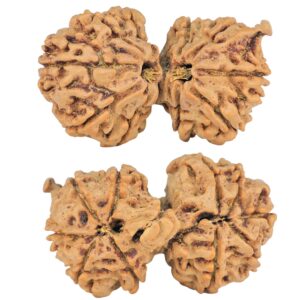 12 MK Mini Trijuti & Ganesh 34.6mm 6.26gm
 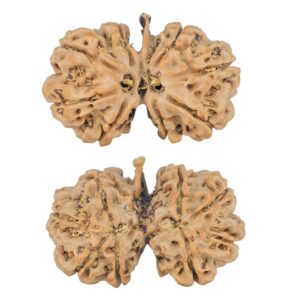 8 Mukhi G.S & Ganesh 29.1mm 4.21gm
 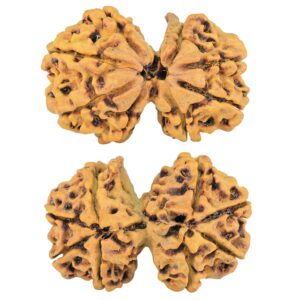 8 Mukhi G.S & Ganesh 31.6mm 5.21gm
 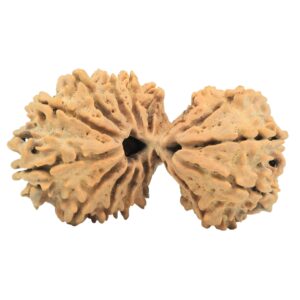 17 Mukhi Mini Trijuti 38.3mm 5.49gm