Rudraksha has been a part of Hindu spiritual traditions for centuries. Often associated with Lord Shiva, these natural beads are worn by devotees, used during meditation and incorporated into daily prayer rituals.
But beyond their religious significance, many people are curious about the power of Rudraksha and how it may influence their inner lives.
Can wearing Rudraksha make you calmer? Can it encourage self-discipline, emotional awareness or a deeper connection with spirituality?
Traditional beliefs describe Rudraksha as a sacred companion for spiritual development. While its supernatural effects are not scientifically established, using Rudraksha as part of a consistent devotional practice may carry personal meaning.
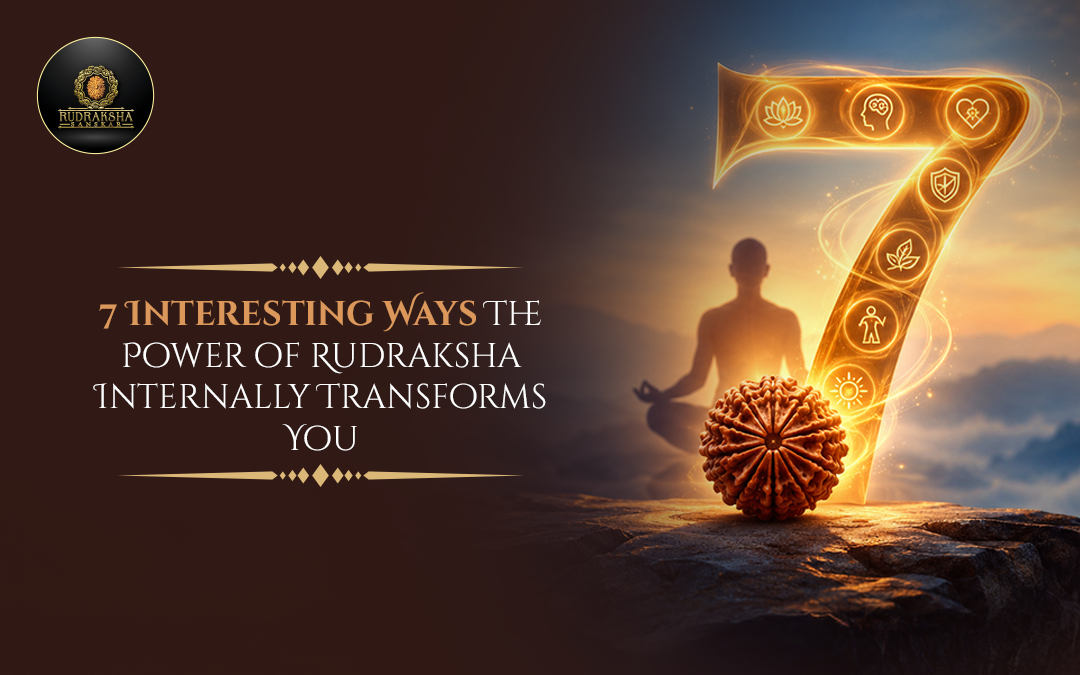
Here are seven interesting ways Rudraksha can become part of your journey towards inner transformation.
1. Encourages Inner Peace and Calmness
Modern life often involves constant distractions, responsibilities and competing priorities.
Finding time for quiet reflection can be difficult.
Rudraksha is traditionally associated with meditation and spiritual awareness, particularly through its connection with Lord Shiva.
Many devotees use a 5 Mukhi Rudraksha mala while practising mantra Japa.
Repeating a mantra with the help of prayer beads provides a structured activity that may encourage focused attention.
For example, a practitioner may recite:
ॐ नमः शिवाय
Om Namah Shivaya.
The repetition, quiet environment and intentional breathing involved in such practices may help some individuals feel calmer.
However, this does not establish that Rudraksha itself directly changes stress hormones or treats anxiety.
Inner transformation begins when you make time for stillness and reflection.
2. Develops Greater Self-Awareness
Self-awareness involves recognising your thoughts, emotions, habits and reactions.
It is an important part of personal growth.
For devotees, Rudraksha can serve as a physical reminder to observe their behaviour and reflect on their intentions.
When you wear a Rudraksha pendant or use a mala during prayer, you may associate it with your commitment to spiritual practice.
Over time, this reminder can encourage you to ask meaningful questions.
Are you reacting too quickly?
Are your actions aligned with your values?
Are you giving enough attention to your personal development?
The bead does not automatically create self-awareness. Instead, it may support a routine that encourages reflection.
3. Inspires Emotional Balance
Emotional balance does not mean avoiding sadness, anger or disappointment.
It means learning to recognise emotions and respond to situations thoughtfully.
In several contemporary Rudraksha traditions, different Mukhi varieties are associated with emotional and spiritual qualities.
For example, the 2 Mukhi Rudraksha is associated with Ardhanarishvara, the united form of Shiva and Shakti.
Its symbolism includes unity, harmony and complementary qualities.
Similarly, Gauri Shankar Rudraksha represents the divine union of Shiva and Parvati.
Devotees may interpret these associations as reminders of patience, understanding and balance.
However, no Rudraksha should be considered a treatment for emotional or psychological conditions.
Emotional well-being also depends on relationships, healthy routines and appropriate professional support when needed.
4. Strengthens Personal Discipline
Discipline is essential for maintaining meaningful habits.
Whether you want to meditate regularly, study consistently or improve your daily routine, lasting progress requires repeated effort.
Rudraksha malas have traditionally been used for counting mantra repetitions.
A mala containing 108 beads is commonly used in Japa practices, although other arrangements also exist.
This provides a simple structure for devotional repetition.
For example, you might dedicate a few minutes each morning to prayer or meditation.
Using the same mala regularly may help reinforce the habit.
The 6 Mukhi Rudraksha is also associated with Lord Kartikeya in several traditions, with symbolism connected to determination and discipline.
The important point is that discipline develops through consistent action, not simply by wearing a particular bead.
5. Encourages Confidence Through Spiritual Reflection
Confidence grows when you understand your abilities, accept your limitations and develop trust in your decisions.
In traditional Rudraksha classifications, the 12 Mukhi Rudraksha is associated with Lord Surya.
Surya represents light, consistency and vitality in Hindu traditions.
Contemporary interpretations also connect this bead with confidence, leadership and self-expression.
For devotees who value these associations, wearing a 12 Mukhi may act as a personal reminder to approach responsibilities with courage.
However, there is no reliable scientific evidence that the bead directly improves confidence or professional performance.
Confidence develops through preparation, experience and constructive self-reflection.
6. Deepens Your Connection With Spirituality
One of the most significant aspects of Rudraksha is its connection with Hindu devotional practices.
Rudraksha is especially associated with Lord Shiva and is mentioned in various religious traditions.
For many devotees, wearing a bead represents a commitment to prayer, devotion and spiritual learning.
A Rudraksha mala may accompany practices such as:
- Mantra Japa
- Meditation
- Shiva worship
- Personal prayer
- Spiritual reflection
These activities can create opportunities to explore religious teachings and personal values.
Some people also choose specific Mukhi varieties based on their devotional interests.
For example, 8 Mukhi Rudraksha is commonly associated with Lord Ganesha, while 9 Mukhi is linked with Goddess Durga in several contemporary traditions.
These associations vary across religious sources and lineages.
The deeper connection comes from the devotion and understanding you bring to the practice.
7. Reminds You to Practise Gratitude and Mindful Living
Gratitude involves recognising the positive aspects of life without ignoring its challenges.
A meaningful spiritual object can serve as a reminder to practise gratitude regularly.
For example, when beginning your morning prayers, you might take a moment to acknowledge your family, opportunities and responsibilities.
Similarly, holding a Rudraksha mala during reflection can provide a consistent starting point for your devotional routine.
This practice may encourage you to become more intentional about your choices.
You may begin paying closer attention to your words, actions and relationships.
Such changes develop through conscious effort rather than any guaranteed supernatural influence of the bead.
Which Rudraksha Should You Choose for Inner Growth?
Different Rudraksha varieties carry different traditional associations.
| Rudraksha | Traditional association | Symbolic focus |
| 5 Mukhi | Kalagni Rudra | Meditation and devotion |
| 2 Mukhi | Ardhanarishvara | Unity and balance |
| 6 Mukhi | Lord Kartikeya | Discipline and determination |
| 8 Mukhi | Lord Ganesha | Wisdom and new beginnings |
| 9 Mukhi | Goddess Durga | Courage and Shakti |
| 12 Mukhi | Lord Surya | Confidence and consistency |
| Gauri Shankar | Shiva and Parvati | Harmony and togetherness |
These are traditional symbolic associations, not scientifically verified effects.
For beginners, a genuine 5 Mukhi mala is often a practical starting point.
There is no requirement to purchase an expensive higher Mukhi bead to begin a meaningful spiritual practice.
How to Make Rudraksha Part of Your Daily Routine
If you want to explore Rudraksha as part of your personal development, begin with simple habits.
Start with a few minutes of prayer. Choose a quiet time when you can focus without interruptions.
Use a mala for Japa. Repeat a mantra according to your religious tradition.
Reflect on your intentions. Consider one quality you want to develop, such as patience or discipline.
Maintain consistency. A short daily practice may be easier to sustain than an elaborate occasional ritual.
Care for your Rudraksha. Keep it clean, dry and protected from harsh chemicals.
Most importantly, approach the practice with realistic expectations.
Why Authentic Rudraksha Matters
If you choose to wear Rudraksha for religious or personal reasons, authenticity is important.
Genuine Rudraksha beads have naturally formed Mukhi divisions.
Artificially carved lines, glued structures and misleading certificates can make identification difficult.
Before purchasing, examine actual specimen photographs and review the available documentation.
For rare higher Mukhi beads, additional examination may be useful.
You can learn more through this guide on how to identify an original Rudraksha.
Avoid sellers who promise immediate spiritual powers, miraculous healing or guaranteed life changes.
Conclusion
The power of Rudraksha is deeply connected with its religious symbolism and the spiritual practices surrounding it.
From encouraging reflection and discipline to supporting meaningful prayer routines, Rudraksha can serve as a personal reminder of the qualities you wish to develop.
However, lasting inner transformation does not happen automatically through wearing a bead.
It comes from your actions, habits, understanding and willingness to grow.
If you wish to buy rudraksha online, choose an authentic bead that aligns with your spiritual interests and personal preferences. Rudraksha may remind you of the path towards inner growth, but your daily choices are what shape the journey.
FAQs
In Hindu traditions, Rudraksha is associated with Lord Shiva, devotion and spiritual practice. Claims about supernatural powers are matters of belief rather than scientifically established facts.
There is no evidence that wearing Rudraksha directly changes personality. However, consistent reflection, meditation and devotional habits may support personal growth.
The 5 Mukhi is widely used for prayer and meditation. Its significance comes from tradition and the practices associated with it.
There is no scientifically established timeline for Rudraksha-related benefits. Personal experiences vary, and meaningful habits generally require consistent effort.
Yes. Many devotees wear Rudraksha regularly, particularly 5 Mukhi beads. Specific customs may vary according to family and religious traditions.