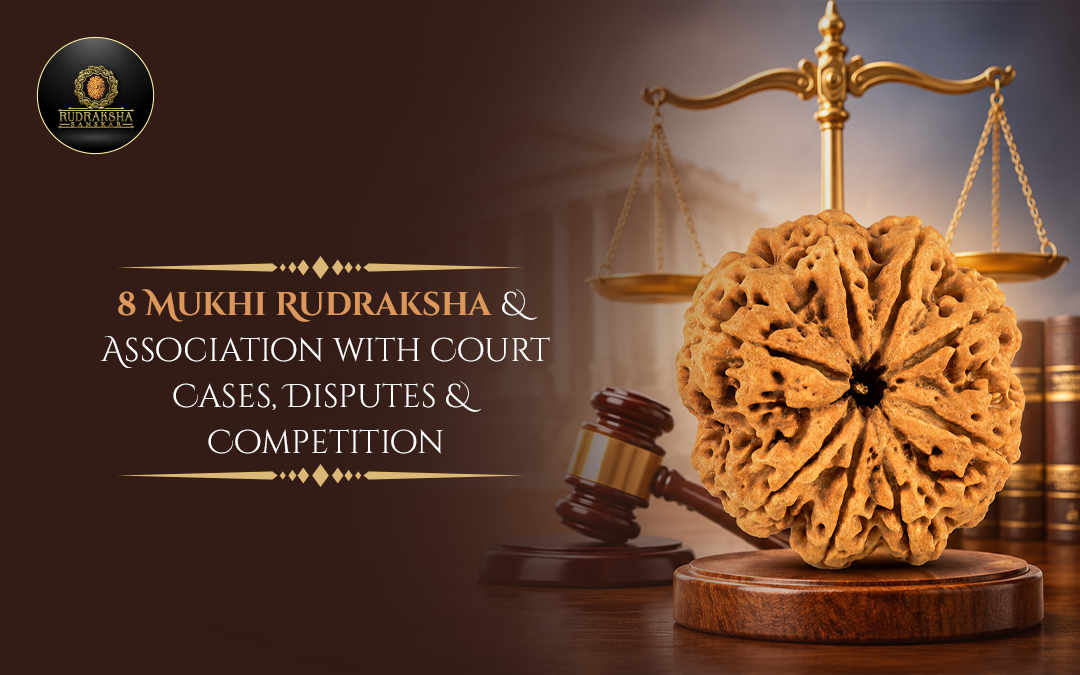
The 8 Mukhi Rudraksha is traditionally associated with Lord Ganesha, the Hindu deity worshipped as the remover of obstacles. This connection makes it a popular devotional choice among people facing difficult situations, including legal disputes, business disagreements and professional competition.
But can 8 Mukhi Rudraksha help with court cases, disputes or competition?
According to Hindu spiritual traditions, the bead symbolises wisdom, clarity and the removal of obstacles. However, there is no scientific or legal evidence that wearing it can influence court judgments, resolve disputes automatically or guarantee victory over competitors.
This guide explains the religious significance of 8 Mukhi Rudraksha, why it is associated with challenging situations and how devotees traditionally wear it.
1. What Is 8 Mukhi Rudraksha?
An 8 Mukhi Rudraksha is a natural Rudraksha bead with eight facial divisions, known as Mukhi.
The 8 Mukhi Rudraksha is commonly associated with Lord Ganesha in Hindu devotional traditions.
Ganesha is worshipped at the beginning of important activities and is known as Vighnaharta, meaning the remover of obstacles.
Because of this association, devotees often choose 8 Mukhi Rudraksha during periods involving difficult decisions, uncertainty or personal challenges.
Its significance is religious and symbolic rather than a scientifically established ability to change external events.
2. Why Is 8 Mukhi Rudraksha Associated With Court Cases?
Court cases often involve uncertainty, financial pressure, complicated procedures and lengthy waiting periods.
In contemporary Rudraksha interpretations, 8 Mukhi is sometimes recommended to people experiencing legal difficulties because of its association with Lord Ganesha.
Traditional Spiritual Interpretation
Ganesha represents wisdom, thoughtful action and the removal of obstacles.
For someone involved in litigation, these qualities may symbolise the importance of patience, clarity and responsible decision-making.
Does 8 Mukhi Rudraksha Help Win Court Cases?
There is no reliable evidence that wearing 8 Mukhi Rudraksha influences judges, legal proceedings or case outcomes.
Court decisions depend on applicable laws, evidence, legal arguments and judicial processes.
A devotee may wear the bead for personal spiritual reassurance while continuing to follow professional legal advice.
Important: Rudraksha should never replace legal representation, evidence preparation or compliance with court deadlines.
3. Can 8 Mukhi Rudraksha Help With Business and Property Disputes?
Business and property disputes can involve disagreements over contracts, payments, ownership or responsibilities.
Some devotees associate 8 Mukhi Rudraksha with overcoming obstacles during these situations.
Business Disputes
A business owner dealing with delayed payments or contractual disagreements may choose the bead as part of a personal prayer routine.
Its association with Ganesha can serve as a reminder to approach problems calmly and make informed decisions.
However, resolving business disputes requires practical measures such as reviewing agreements, maintaining records and seeking appropriate professional guidance.
Property Disputes
Property disagreements may involve ownership documents, inheritance, boundaries or contractual obligations.
Wearing Rudraksha cannot establish ownership rights or resolve legal claims.
For property-related matters, accurate documentation and qualified legal advice remain essential.
4. Why Is 8 Mukhi Rudraksha Linked With Competition?
Competition is another area where 8 Mukhi Rudraksha is frequently discussed.
Students, business owners and professionals may encounter competitive situations involving examinations, promotions, contracts or market opportunities.
Spiritual Meaning of Competition
Lord Ganesha is associated with wisdom and the ability to overcome obstacles.
Within this symbolic framework, 8 Mukhi Rudraksha may represent:
- Determination during difficult situations
- Patience when facing setbacks
- Thoughtful decision-making
- Commitment to consistent effort
- Confidence grounded in preparation
These qualities can be meaningful personal intentions.
However, the bead does not guarantee examination success, business growth or victory over competitors.
5. Who Commonly Chooses 8 Mukhi Rudraksha?
The bead may appeal to devotees facing different forms of uncertainty.
| Situation | Traditional symbolic association | Practical priority |
| Court cases | Overcoming obstacles | Legal advice and evidence |
| Business disputes | Wisdom and clarity | Contracts and documentation |
| Property disagreements | Patience and thoughtful action | Ownership records |
| Competitive exams | Determination | Study and practice |
| Professional competition | Confidence and discipline | Skills and preparation |
| Business challenges | Perseverance | Planning and execution |
These associations reflect devotional beliefs, not guaranteed outcomes.
6. How to Wear 8 Mukhi Rudraksha
Devotees may wear 8 Mukhi Rudraksha as a pendant or bracelet.
A simple traditional process includes the following steps.
Step 1: Choose an Authentic Bead
Check that the Rudraksha has eight naturally formed Mukhi divisions.
Step 2: Clean the Bead
Gently remove dirt using a soft cloth. Avoid harsh chemicals and prolonged soaking.
Step 3: Select a Suitable Day
Wednesday is commonly associated with Lord Ganesha and is sometimes preferred for beginning Ganesha-focused worship.
Monday is also used in broader Rudraksha traditions.
Neither day is universally compulsory.
Step 4: Chant a Ganesha Mantra
A commonly recited mantra is:
ॐ गं गणपतये नमः
Om Gam Ganapataye Namah.
Devotees may chant it 11, 21 or 108 times according to their practice.
Step 5: Wear the Rudraksha
Use a comfortable thread or suitable pendant setting.
Ensure the bead is secure and protected from physical damage.
7. Should You Wear 8 Mukhi Rudraksha in Silver or Thread?
Both options are used in devotional practices.
A cotton or silk thread provides a simple and lightweight wearing method.
A silver pendant may offer a more durable setting, depending on its construction.
There is no universally accepted requirement that 8 Mukhi Rudraksha must be worn in silver.
Likewise, no scientific evidence establishes that the mounting material affects legal outcomes or competitive success.
Choose a secure, comfortable option that preserves the natural bead.
8. Can You Keep 8 Mukhi Rudraksha in Your Puja Room?
Yes. Devotees may keep the bead in a home temple instead of wearing it.
It can be placed near an image or idol of Lord Ganesha according to family customs.
A simple devotional practice may include offering flowers and reciting Om Gam Ganapataye Namah.
Keep the bead on a clean, dry surface and away from direct flames or excessive moisture.
For someone who owns a rare or expensive specimen, puja room placement may also reduce the risk of accidental damage.
9. How to Identify an Original 8 Mukhi Rudraksha
Authentication is important because uncommon Mukhi varieties may attract premium prices.
Check the facial divisions: A genuine 8 Mukhi should have eight natural Mukhi divisions.
Examine the surface: Look for suspicious cuts, fillings or artificial modifications.
Request actual photographs: Review the specimen from multiple angles.
Verify documentation: For premium beads, ask for credible specimen-specific authentication.
Avoid unreliable tests: Floating and copper-coin tests cannot reliably establish authenticity.
Read how to identify an original Rudraksha for more guidance.
Conclusion
The 8 Mukhi Rudraksha is associated with Lord Ganesha, making it a meaningful devotional symbol for people facing obstacles, disputes and competitive situations.
Its connection with court cases, business disagreements and competition comes primarily from the traditional symbolism of Ganesha as Vighnaharta.
However, Rudraksha cannot replace legal advice, professional planning or consistent effort.
If you wish to buy rudraksha online, prioritise genuine natural structure, reliable authentication and transparent product information.
FAQs
It is traditionally associated with Lord Ganesha and the removal of obstacles. However, wearing it does not guarantee a favourable court judgment.
8 Mukhi Rudraksha is commonly recommended in contemporary spiritual interpretations because of its association with Ganesha. This is a devotional belief, not a legal remedy.
Yes. Business owners may wear it according to their religious preferences. It does not guarantee commercial success or dispute resolution.
Om Gam Ganapataye Namah is a commonly used Ganesha mantra. Specific Mukhi-related mantras may vary between traditions.
Some devotees associate it with determination and overcoming obstacles. However, examination performance depends on preparation, knowledge and practice.