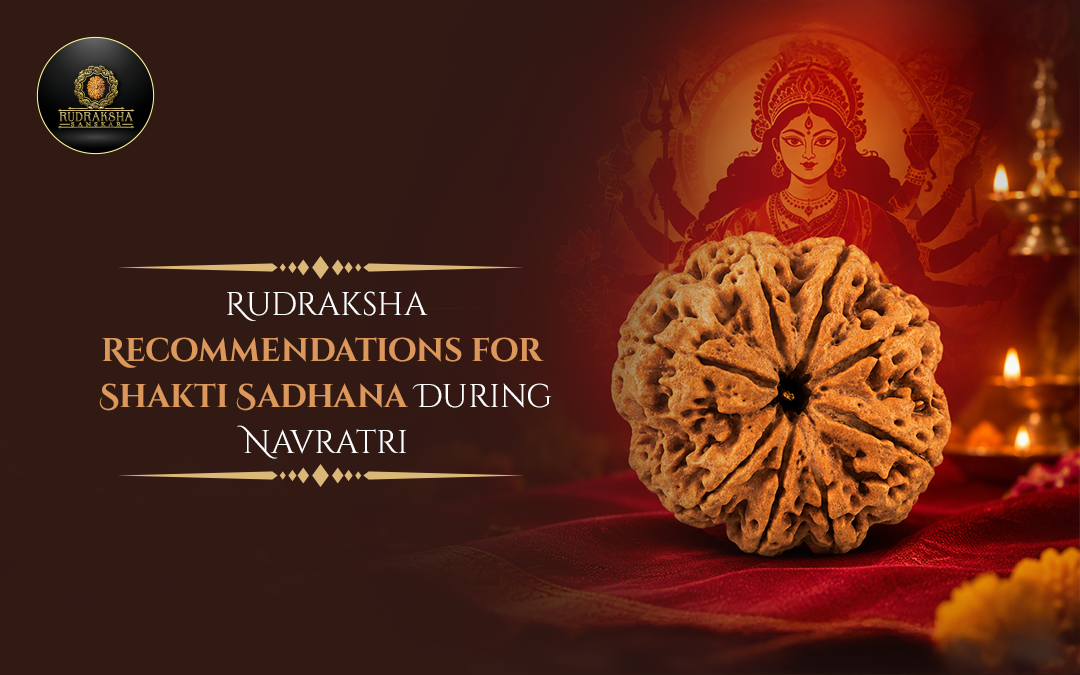
Navratri is more than nine nights of celebration. For many devotees, it is a time for prayer, meditation, mantra chanting and connecting with Goddess Durga through Shakti Sadhana.
And if you already use Rudraksha in your spiritual practice, you might wonder: Which Rudraksha should you wear or use during Navratri?
The answer depends on your purpose.
A 9 Mukhi Rudraksha is commonly associated with Goddess Durga and Navdurga. A 5 Mukhi mala is a practical choice for daily mantra chanting. Other Mukhis may hold meaning within particular devotional traditions.
However, you don’t need an expensive or rare Rudraksha to practise Shakti Sadhana.
Let’s explore the traditional associations, practical recommendations and simple ways to use Rudraksha throughout Navratri.
1. What Is Shakti Sadhana During Navratri?
Shakti Sadhana is a devotional practice centred on Shakti, the divine feminine power worshipped through forms such as Durga, Kali, Lakshmi and Saraswati.
During Navratri, devotees commonly focus on Goddess Durga and her nine forms, collectively known as Navdurga.
Shakti Sadhana may include:
- Mantra Japa, or repeated chanting
- Meditation and prayer
- Worship of Goddess Durga
- Recitation of devotional hymns
- Fasting according to personal tradition
- Reflection on courage, discipline and compassion
Rudraksha may be used as a meditation aid, worn as a devotional symbol or incorporated into mantra practice.
It is not compulsory for Shakti worship, and some Shakta traditions use other types of prayer beads.
Your family’s customs or your spiritual teacher’s guidance should take priority over general product recommendations.
2. Which Rudraksha Is Best for Shakti Sadhana?
The best Rudraksha depends on whether you want a bead associated with Goddess Durga or a mala for regular chanting.
Here are five options worth understanding.
9 Mukhi Rudraksha: For Devotion to Goddess Durga
The 9 Mukhi Rudraksha is one of the most directly relevant choices for devotees interested in Navdurga symbolism.
In several contemporary Rudraksha traditions, it is associated with Goddess Durga and her nine forms.
Its traditional symbolism includes courage, determination, spiritual confidence and protective divine energy.
Best suited for: Devotees who want a wearable Rudraksha associated with Durga worship.
You can wear a single authenticated 9 Mukhi as a pendant or incorporate it into a suitable necklace.
Remember that its nine faces represent a devotional association. Wearing it does not guarantee protection or freedom from difficulties.
5 Mukhi Rudraksha: For Daily Mantra Japa
A 5 Mukhi Rudraksha is a practical choice for someone who wants to maintain a consistent chanting routine.
It is widely available and commonly used in Rudraksha Japa malas.
A traditional mala may contain 108 counting beads with an additional guru bead.
Best suited for: Beginners and regular practitioners who want a dedicated mala for mantra repetition.
The 5 Mukhi is traditionally associated with Shiva, particularly Kalagni Rudra, rather than exclusively with Goddess Durga.
Nevertheless, some devotees use Rudraksha malas during Shakti worship as part of their personal practice.
If your lineage recommends a different mala material for a particular Durga mantra, follow that guidance.
8 Mukhi Rudraksha: For Ganesha Worship Before Sadhana
The 8 Mukhi Rudraksha is commonly associated with Lord Ganesha in contemporary Rudraksha traditions.
Ganesha is traditionally worshipped at the beginning of many Hindu religious observances.
For devotees who begin Navratri prayers with Ganesha Vandana, the 8 Mukhi may carry additional symbolic meaning.
Best suited for: Practitioners whose devotional routine includes Ganesha worship before their main Shakti prayers.
It is not a necessary addition to every Navratri practice.
7 Mukhi Rudraksha: For Lakshmi-Related Devotional Symbolism
The 7 Mukhi Rudraksha is associated with Mahalakshmi in several contemporary Rudraksha traditions.
Navratri observances vary by region and lineage. Some traditions devote particular periods of the festival to Lakshmi worship.
This makes the 7 Mukhi meaningful for devotees who incorporate Mahalakshmi prayers into their Shakti Sadhana.
Best suited for: Those whose Navratri worship includes Goddess Lakshmi.
Its association with prosperity is symbolic and should not be interpreted as a guarantee of financial gains.
6 Mukhi Rudraksha: For Discipline and Spiritual Commitment
The 6 Mukhi Rudraksha is traditionally associated with Kartikeya, also known as Skanda.
Its symbolism includes discipline, determination and courage.
These qualities may resonate with devotees who want to maintain a committed nine-day spiritual routine.
Best suited for: Practitioners drawn to Kartikeya’s symbolism of discipline and resolve.
However, 6 Mukhi is not a universally prescribed Rudraksha for Navdurga worship.
3. Should You Wear One Rudraksha or a Combination?
You do not need multiple Rudraksha to practise Shakti Sadhana.
For most beginners, a simple approach is easier to maintain.
Consider these options:
| Your purpose | Suggested option |
| Devotion to Goddess Durga | Single 9 Mukhi |
| Daily mantra chanting | 5 Mukhi Japa mala |
| Durga worship with regular Japa | 9 Mukhi pendant and separate 5 Mukhi mala |
| Ganesha prayers before Sadhana | 8 Mukhi, if meaningful to your tradition |
| Lakshmi-focused worship | 7 Mukhi, where traditionally appropriate |
These are practical suggestions based on common symbolism, not compulsory religious prescriptions.
A combination is not automatically more spiritually effective than a single bead.
If you already own an authentic Rudraksha mala, you may not need to purchase anything new.
4. How to Use Rudraksha for Nine Days of Navratri
A simple routine can help you maintain consistency without turning your devotional practice into an elaborate checklist.
Begin With a Clear Intention
Before starting, decide what you want your practice to focus on.
Perhaps you want to develop greater patience, courage, gratitude or spiritual discipline.
Keep your intention realistic and meaningful.
Choose Your Mantra
A commonly recited mantra dedicated to Goddess Durga is:
ॐ दुं दुर्गायै नमः
Om Dum Durgayai Namah.
You may chant this as part of your devotional practice if it is appropriate to your tradition.
Some mantras, especially those involving specific Tantric procedures or initiatory practices, are traditionally learned from a qualified teacher.
Avoid assuming that every mantra should be practised without guidance.
Use Your Mala Consistently
If you use a Japa mala, choose a manageable number of repetitions.
Some practitioners complete one round of 108 repetitions, while others follow a different count.
Consistency is more important than selecting an ambitious number you cannot comfortably maintain.
Reflect on the Nine Forms of Durga
Each day, you can reflect on the form of Navdurga traditionally worshipped during that part of the festival.
For example, Brahmacharini represents discipline, Chandraghanta courage and Skandamata nurturing.
You do not need a different Rudraksha for every day.
The 9 Mukhi may serve as a devotional symbol of Navdurga collectively.
Complete Your Practice With Gratitude
At the end of your daily prayers, take a moment for quiet reflection.
Navratri Sadhana can be meaningful through regular devotion rather than elaborate rituals or expensive spiritual accessories.
5. Can You Start Wearing a New Rudraksha During Navratri?
Yes. Some devotees choose Navratri as a meaningful occasion to begin wearing a Rudraksha.
There is no universal requirement that a Rudraksha must first be worn during this festival.
If you purchase a new bead, follow a simple approach:
- Verify its authenticity before purchase.
- Ensure the bead and thread are clean and in good condition.
- Offer prayers according to your tradition.
- Wear it comfortably or keep it in your worship space.
- Handle and store it carefully after use.
Some families follow specific purification or consecration rituals.
Others simply begin wearing the bead after prayer.
Neither approach should be presented as universally compulsory.
6. How to Choose an Authentic Rudraksha for Navratri
If you’re buying Rudraksha specifically for the festival, avoid making a rushed decision.
Pay attention to the bead itself rather than claims about instant spiritual results.
Check for:
Natural Mukhi lines: The facial divisions should be naturally formed, not artificially carved.
Exact specimen photographs: For higher Mukhi beads, ask to see the actual Rudraksha being sold.
Surface condition: Look for suspicious alterations, filler or repairs.
Reliable documentation: Check whether the certificate identifies the specimen and explains the examination performed.
Appropriate pricing: Compare quality, origin, size and documentation rather than assuming the most expensive bead is best.
Clear seller information: Avoid promises of guaranteed protection, wealth or immediate transformation.
A genuine 5 Mukhi mala may be more suitable for daily chanting than a rare higher Mukhi that doesn’t serve your actual practice.
7. Common Mistakes to Avoid During Navratri Sadhana
A meaningful spiritual routine doesn’t require collecting every Mukhi.
Here are some mistakes worth avoiding.
Buying too many beads: Start with one suitable Rudraksha or a dedicated Japa mala.
Assuming every goddess requires a different Mukhi: There is no universally accepted one-to-one Rudraksha assignment for all nine forms of Durga.
Choosing rarity over purpose: A rare bead is not automatically more suitable for your practice.
Ignoring authenticity: Festival demand should never replace careful verification.
Expecting guaranteed results: Rudraksha is a devotional object, not a substitute for practical action, medical care or professional advice.
Following complicated rituals without understanding them: Keep your practice aligned with your religious tradition and level of experience.
Keep Your Navratri Sadhana Simple and Meaningful
Navratri offers nine days to reconnect with the qualities represented by Goddess Durga: strength, courage, compassion, discipline and wisdom.
Rudraksha can support that devotional intention, but it should not become the centre of your practice.
A 9 Mukhi may be meaningful for Durga worship. A 5 Mukhi mala can be a practical companion for regular chanting. Other Mukhis may hold significance depending on your spiritual tradition.
The most suitable choice is the one that aligns with your actual practice, not the one with the highest price. When you buy rudraksha online, prioritise authenticity, suitability and clear information about the bead.
FAQs
The 9 Mukhi Rudraksha is commonly associated with Goddess Durga and Navdurga in several contemporary Rudraksha traditions.
Yes, some devotees use 5 Mukhi Rudraksha malas for Durga Japa. However, particular Shakta lineages may recommend other mala materials for specific mantras.
No. There is no universal requirement to wear nine different Mukhis during Navratri. A single bead or suitable Japa mala may be sufficient.
No. An existing authentic Rudraksha can continue to be used when properly maintained. Buying a new bead every year is not a religious necessity.
No. Shakti Sadhana can be performed without Rudraksha. The bead is an optional devotional aid in traditions that use it.
Yes. Beginners can start with simple prayers, meditation or familiar devotional mantras. Advanced practices should be learned through appropriate guidance.