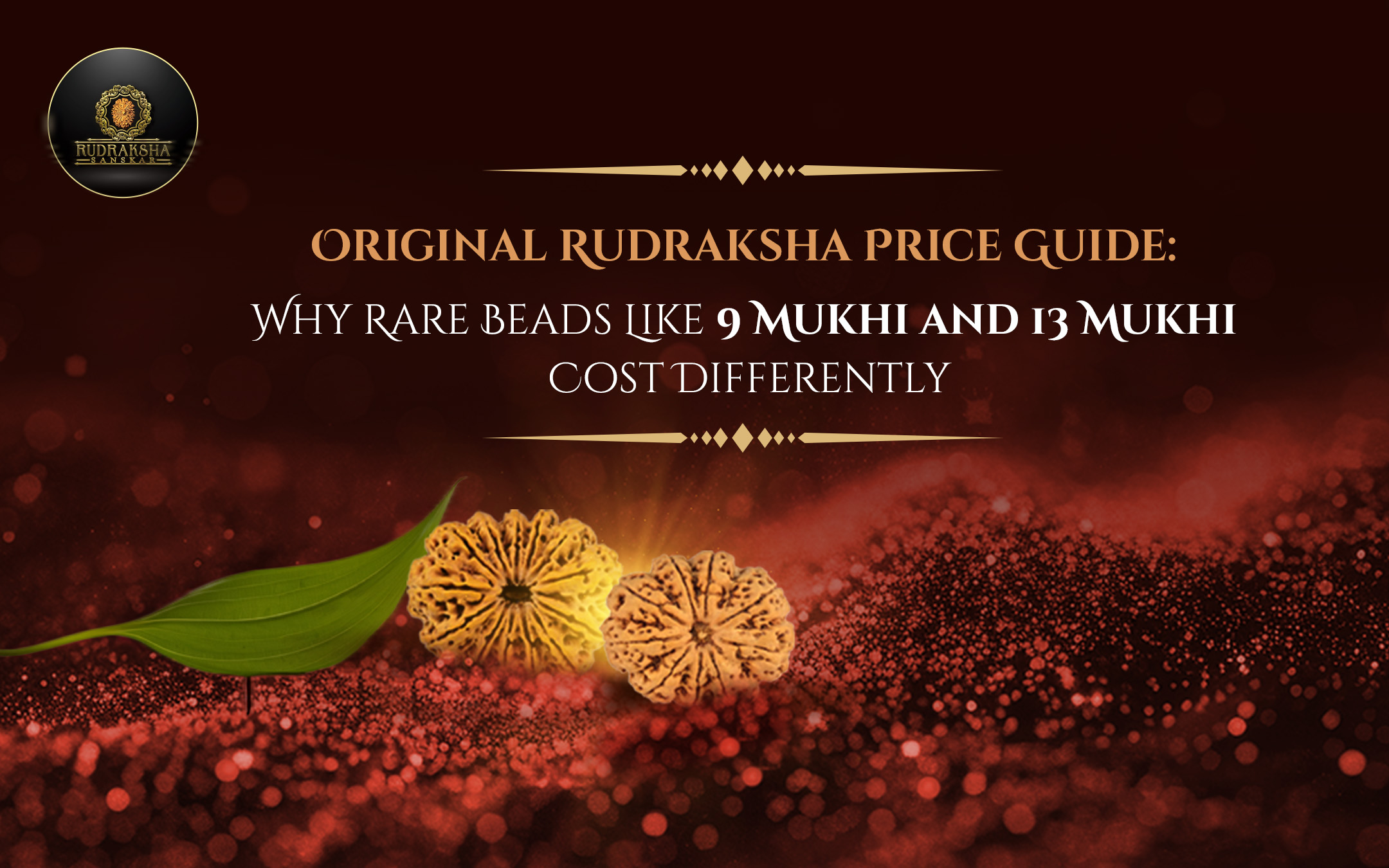
Rudraksha pricing can be confusing for many buyers. One seller may show a bead at a very low price, while another may list the same Mukhi at a much higher cost. This confusion becomes stronger when buyers compare rare or semi-rare beads like 9 Mukhi and 13 Mukhi Rudraksha.
The truth is that Rudraksha is a natural spiritual bead, not a factory-made product with fixed pricing. Every bead differs in origin, size, shape, texture, Mukhi clarity, rarity, condition, and authenticity. That is why the original rudraksha price can vary even for beads with the same Mukhi count.
This guide explains why rare beads like 9 Mukhi and 13 Mukhi Rudraksha cost differently, what affects their value, and how buyers can avoid fake or overpriced beads while purchasing online.
Why Rudraksha Prices Differ So Much
Rudraksha grows naturally, so no two beads are exactly the same. Even if two beads have the same Mukhi count, their price can differ based on quality, origin, size, and availability.
For example, a small Indonesian 9 Mukhi Rudraksha may cost differently from a larger Nepali 9 Mukhi Rudraksha. Similarly, a well-formed 13 Mukhi Rudraksha with clear natural lines may be priced higher than a bead with unclear formation or poor condition.
Price is usually influenced by three main factors:
- Rarity of the Mukhi
- Quality and natural formation of the bead
- Trust and authenticity assurance from the seller
This is why buyers should never judge Rudraksha only by price.
9 Mukhi Rudraksha: Why Its Price Can Vary
9 Mukhi Rudraksha is traditionally associated with Maa Durga, courage, protection, inner strength, and fearlessness. Many people search for 9 Mukhi Rudraksha benefits when they are seeking emotional strength, spiritual protection, or support during challenging phases.
The price of 9 Mukhi Rudraksha may vary because of:
- Origin of the bead
- Size and weight
- Clarity of nine Mukhi lines
- Natural texture
- Demand during Navratri or Durga-related worship periods
- Certification and authenticity support
- Seller credibility
A larger Nepali bead with deep and clear Mukhi lines may be priced higher than a smaller Indonesian bead. Both can be original, but their market value may differ due to appearance, availability, and buyer demand.
13 Mukhi Rudraksha: Why It Usually Costs More
13 Mukhi Rudraksha is traditionally associated with Kamadeva and Lord Indra in many Rudraksha traditions. It is linked with confidence, attraction, fulfilment, charm, personal influence, and success.
Buyers often look for 13 Mukhi Rudraksha benefits when they want support for confidence, recognition, professional growth, public presence, or personal fulfilment.
13 Mukhi Rudraksha often costs more than commonly available beads because it is rarer and more difficult to source in genuine form. Its price depends on:
- Natural 13 Mukhi line clarity
- Origin, especially Nepali or Indonesian
- Size and shape
- Demand among business owners, professionals, and spiritual seekers
- Certification
- Condition of the bead
- Seller trust
Since higher Mukhi beads are more likely to be duplicated or artificially modified, buyers should check authenticity carefully before purchasing.
9 Mukhi vs 13 Mukhi Rudraksha Price Difference
| Price Factor | 9 Mukhi Rudraksha | 13 Mukhi Rudraksha |
| Rarity | Less rare than 13 Mukhi but still valuable | Rarer and usually higher priced |
| Traditional Association | Maa Durga, protection, courage | Kamadeva, Lord Indra, confidence, fulfilment |
| Buyer Demand | Strong among people seeking protection and Shakti energy | Strong among people seeking success, charm, and recognition |
| Availability | More available than 13 Mukhi | Less commonly available in original form |
| Risk of Imitation | Possible, especially with unclear lines | Higher because of rarity and price |
| Price Range | Varies by origin and quality | Usually higher due to rarity |
This comparison shows that pricing is not only about Mukhi count. Rarity, demand, and authenticity all play important roles.
Origin: Nepali vs Indonesian Rudraksha
Origin is one of the biggest factors affecting Rudraksha price. Nepali and Indonesian beads are both used in spiritual practice, but their appearance and market value differ.
Nepali Rudraksha beads are usually larger, heavier, and have deeper texture. Because of their strong appearance and demand, they are often priced higher.
Indonesian Rudraksha beads are usually smaller, lighter, and have finer lines. They may be more affordable and comfortable for daily wearing.
This applies to both 9 Mukhi and 13 Mukhi Rudraksha. However, buyers should remember that a genuine Indonesian bead is always better than a fake Nepali bead.
Mukhi Line Clarity and Natural Formation
Mukhi lines are the natural divisions on a Rudraksha bead. They should run from one end to the other. Clear Mukhi lines make the bead easier to identify and increase buyer confidence.
For 9 Mukhi Rudraksha, all nine natural lines should be visible and not artificially carved.
For 13 Mukhi Rudraksha, clear identification becomes even more important because higher Mukhi beads are more expensive and more likely to be misrepresented.
Before buying, check:
- Are the lines natural?
- Do they run from top to bottom?
- Do they look scratched or carved?
- Is the bead overly polished?
- Are actual product images shown?
- Is authenticity support available?
A bead with unclear Mukhi lines should be checked carefully before purchase.
Size, Shape and Condition
Size and shape also affect Rudraksha price. Larger beads usually cost more, especially when they are naturally formed and have clear Mukhi lines. Well-balanced shapes may also be valued higher.
However, Rudraksha does not need to be perfectly round to be original. Since it is a natural seed, some irregularity is normal.
Condition matters because cracks, broken surfaces, artificial cuts, or glued areas reduce the value of the bead. Rare beads should always be checked for natural texture and structural integrity before purchase.
Certification and Seller Trust
Certification or authenticity assurance can affect the price because it helps buyers feel more confident, especially when buying rare beads online.
A trusted seller should provide:
- Clear product images
- Mukhi count details
- Authenticity support
- Transparent price explanation
- Wearing guidance
- Support before purchase
- No unrealistic claims
Many buyers search for a government certified rudraksha shop online because they want trust while buying rare spiritual beads. If any seller uses this claim, it should be supported by clear and verifiable information.
Why Cheap Rare Rudraksha Can Be Risky
Low pricing may look attractive, but buyers should be careful when rare beads are sold at unusually cheap rates. This is especially true for beads like 13 Mukhi Rudraksha.
Cheap rare beads may sometimes have:
- Artificially carved lines
- Wrong Mukhi count
- Poor-quality texture
- Heavy polishing
- Modified or damaged surface
- No authenticity support
- Generic product images
This does not mean every affordable Rudraksha is fake. It simply means buyers should check the bead carefully before choosing only by price.
Is a Higher Price Always Better?
No. A higher price does not automatically mean the bead is original or suitable.
A genuine bead should be naturally formed, properly identified, clearly explained, and supported with authenticity assurance. Some sellers may overprice rare beads without giving proper proof.
Before paying a high price, ask:
- Why is this bead priced higher?
- Is the Mukhi count clearly visible?
- Are actual product images available?
- Is authenticity support provided?
- Is the bead suitable for my purpose?
- Is guidance available before purchase?
The right Rudraksha is not always the most expensive one. It is the one that is original and suitable.
How to Buy Original 9 Mukhi or 13 Mukhi Rudraksha Online
Before you buy original rudraksha online, compare more than price. Look at product clarity, authenticity, seller support, and your actual need.
A safe buying checklist includes:
- Clear actual images of the bead
- Visible Mukhi lines
- Natural texture
- No artificial carving
- No glued or modified structure
- Authenticity assurance
- Transparent pricing
- Seller credibility
- Proper guidance before buying
Rare beads should never be purchased in a hurry.
Which One Should You Choose?
Choose 9 Mukhi Rudraksha if your purpose is courage, protection, emotional strength, fearlessness, or devotion to Maa Durga.
Choose 13 Mukhi Rudraksha if your purpose is confidence, charm, fulfilment, recognition, personal influence, or professional growth.
Both beads are spiritually meaningful, but they serve different purposes. The better choice depends on your life situation and guidance, not only on price.
Common Mistakes Buyers Make
Avoid these mistakes while comparing prices:
- Assuming cheaper means better value
- Assuming expensive means original
- Buying rare beads without checking Mukhi lines
- Ignoring origin and condition
- Not asking for actual images
- Believing instant-result promises
- Choosing only by popularity
- Ignoring suitability
- Buying without authenticity support
A careful buyer looks at both spiritual purpose and product authenticity.
The price of original Rudraksha depends on rarity, origin, size, shape, Mukhi clarity, condition, certification, and seller credibility. Rare beads like 9 Mukhi and 13 Mukhi Rudraksha cost differently because their availability, demand, spiritual associations, and identification risks are different.
9 Mukhi Rudraksha is commonly associated with Maa Durga, courage, and protection, while 13 Mukhi Rudraksha is linked with confidence, fulfilment, charm, and success. Both can be valuable when genuine, but they should be chosen with proper understanding.
If you wish to buy Rudraksha online, choose a trusted seller like Rudraksha Sanskar for authentic beads, transparent guidance, and a more confident spiritual purchase.