Not every Rudraksha grows as a perfectly separate, round bead.
Some develop unusual natural formations. Two beads may grow together, three may appear joined, or a smaller bead-like structure may be attached to a larger one.
Then there are Rudraksha with natural protrusions that resemble particular shapes.
These formations are often considered special in traditional Rudraksha practices.
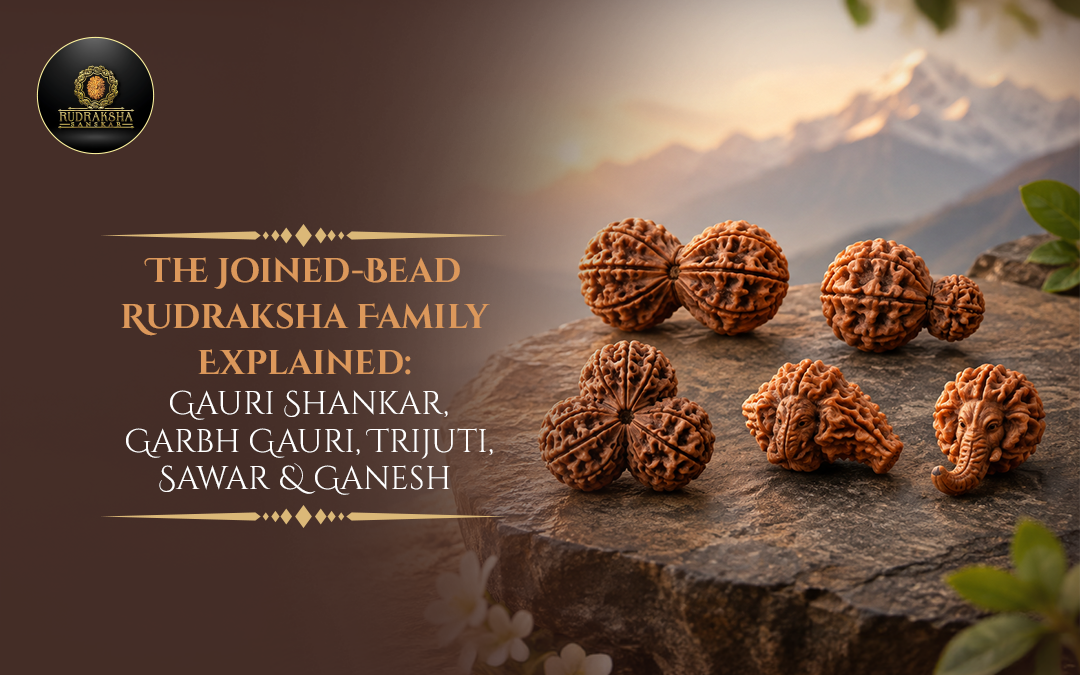
You may have heard names such as Gauri Shankar, Garbh Gauri, Trijuti, Sawar and Ganesh Rudraksha.
But what makes them different?
Are they all naturally joined beads? Which ones are rare? And how can you identify an original specimen?
Let’s understand each formation without confusing their physical structure or traditional meaning.
What Are Naturally Joined Rudraksha?
A naturally joined Rudraksha is a formation in which two or more bead-like structures develop together.
Instead of appearing as completely separate seeds, they form a connected structure.
Some special Rudraksha formations are classified according to:
- The number of joined beads
- Their relative sizes
- The shape of the attachment
- Natural surface features
- Unusual protrusions
However, not every special Rudraksha is technically a joined-bead formation.
This distinction becomes particularly important when comparing Ganesh Rudraksha with Gauri Shankar, Trijuti and Sawar.
1. Gauri Shankar Rudraksha: Two Naturally Joined Beads
A Gauri Shankar Rudraksha consists of two Rudraksha naturally joined together.
Its name refers to Goddess Parvati, also known as Gauri, and Lord Shiva, known as Shankar.
What Does It Look Like?
The most recognisable feature is the presence of two connected bead-like structures.
Their sizes may be similar or somewhat different.
The natural connection is the important identifying characteristic.
Traditional Significance
Gauri Shankar is traditionally associated with:
- Shiva and Parvati
- Unity and togetherness
- Harmony in relationships
- Partnership
- Spiritual balance
Because of these associations, it is commonly selected by people interested in symbolism connected with marriage, family and relationships.
However, wearing Gauri Shankar does not guarantee marriage, reconciliation or relationship success.
What Makes It Special?
Unlike a regular Rudraksha with a single bead structure, Gauri Shankar has a naturally joined double formation.
Authenticity depends on confirming that the two parts developed together rather than being artificially attached.
2. Garbh Gauri Rudraksha: The Mother and Child Formation
A Garbh Gauri Rudraksha also consists of two naturally joined bead-like structures.
This often creates confusion.
If both Gauri Shankar and Garbh Gauri have two joined beads, what is the difference?
The answer is their relative size and traditional interpretation.
What Does Garbh Gauri Look Like?
Garbh Gauri typically has:
- One noticeably larger bead-like structure
- One smaller attached bead-like structure
- A natural connection between them
The size difference creates an appearance traditionally interpreted as a mother and child.
Traditional Significance
Garbh Gauri is associated with:
- Motherhood
- Nurturing
- Maternal affection
- Family bonds
- Protection and care
Some traditions connect it with Goddess Parvati and Lord Ganesha.
It is often discussed in relation to motherhood and family aspirations.
These are religious and cultural associations, not medical claims.
A Garbh Gauri Rudraksha should not be presented as a treatment for infertility or a guarantee of pregnancy.
Gauri Shankar vs Garbh Gauri
Both are naturally joined double formations.
The distinction generally lies in the relative size of the two parts and their traditional symbolism.
Gauri Shankar is primarily associated with Shiva-Parvati unity.
Garbh Gauri emphasises mother-child symbolism.
3. Trijuti Rudraksha: Three Naturally Joined Beads
A Trijuti Rudraksha consists of three naturally joined Rudraksha.
This makes it structurally different from Gauri Shankar and Garbh Gauri.
What Does It Look Like?
Instead of two joined bead-like structures, a Trijuti has three.
Their relative sizes and arrangement can vary.
The three-part formation should be naturally developed rather than assembled from separate beads.
Traditional Significance
Trijuti is commonly associated with the Trimurti:
- Brahma, representing creation
- Vishnu, representing preservation
- Shiva, representing transformation
Its symbolism centres on the interconnected nature of these three divine functions.
Why Is Trijuti Rare?
A naturally developed three-bead formation is unusual.
Its rarity can depend on the specimen’s:
- Natural structure
- Overall size
- Condition
- Origin
- Quality of the joins
- Authenticity documentation
However, rarity should not be confused with guaranteed spiritual power.
A Trijuti may be especially interesting to collectors because of its unusual natural formation.
4. Sawar Rudraksha: A Smaller Bead Attached to a Larger One
Sawar Rudraksha is another distinctive natural formation.
It is generally identified by a smaller bead-like structure attached to a larger primary Rudraksha.
Unlike a typical Gauri Shankar, the attached part may appear considerably smaller.
What Makes Sawar Different?
Its identifying characteristic is the smaller secondary bead-like formation.
Some Sawar specimens are described using combinations such as 8+1, indicating the claimed Mukhi composition of the connected structures.
However, not every Sawar should automatically be assumed to have the same Mukhi combination.
The actual specimen needs to be examined.
Traditional Significance
Sawar Rudraksha has special importance in certain contemporary Rudraksha traditions.
Its symbolic interpretations vary, so buyers should avoid assuming that every Sawar carries identical religious associations.
Is Sawar the Same as Garbh Gauri?
Not necessarily.
Both may display a large and small connected structure.
However, they are distinguished in the market by their specific formation characteristics, traditional classification and claimed Mukhi arrangement.
Because these categories can sometimes overlap in appearance, careful specimen examination is particularly important.
5. Ganesh Rudraksha: A Natural Trunk-Like Protrusion
A Ganesh Rudraksha is different from the other formations discussed above.
It does not necessarily contain two or three naturally joined beads.
Instead, it is identified by a natural protrusion resembling the trunk of Lord Ganesha.
What Does Ganesh Rudraksha Look Like?
Its most recognisable feature is a raised, trunk-like extension on the bead’s surface.
The protrusion should be naturally developed.
A Ganesh Rudraksha can occur with different Mukhi counts.
This is important because Ganesh Rudraksha and 8 Mukhi Rudraksha are not interchangeable classifications.
An 8 Mukhi is identified by eight natural faces.
A Ganesh Rudraksha is identified by its special protrusion.
Traditional Significance
Ganesh Rudraksha is associated with Lord Ganesha, traditionally worshipped as the remover of obstacles.
Its symbolism includes:
- New beginnings
- Wisdom
- Determination
- Overcoming obstacles
- Thoughtful decision-making
These associations are spiritual rather than guarantees of specific outcomes.
Gauri Shankar vs Garbh Gauri vs Trijuti vs Sawar vs Ganesh
Here is a simple comparison of the five formations.
| Rudraksha | Physical characteristic | Traditional symbolism |
| Gauri Shankar | Two naturally joined beads | Shiva-Parvati unity and harmony |
| Garbh Gauri | Larger and smaller naturally joined structures | Motherhood and nurturing |
| Trijuti | Three naturally joined beads | Brahma, Vishnu and Shiva |
| Sawar | Smaller bead-like structure attached to a primary bead | Varies by tradition and formation |
| Ganesh | Natural trunk-like protrusion | Lord Ganesha and new beginnings |
The easiest way to remember the difference is:
Gauri Shankar: Two joined.
Garbh Gauri: Mother-and-child-like joined formation.
Trijuti: Three joined.
Sawar: Smaller bead-like attachment.
Ganesh: Trunk-like protrusion.
What Is Ganesh Sawar Rudraksha?
Another term buyers may encounter is Ganesh Sawar Rudraksha.
This describes a specimen claimed to display both:
- A natural Ganesh-like protrusion
- A Sawar-type attached bead-like formation
It should not be confused with an ordinary Ganesh Rudraksha or Sawar Rudraksha.
Because this combines unusual characteristics, verifying the exact specimen is particularly important.
Buyers can explore the Sawar Ganesh Rudraksha category to understand the products available under this classification.
Which of These Rudraksha Is the Rarest?
There is no reliable universal ranking that applies to every specimen.
Rarity depends on several factors, including:
- Frequency of the natural formation
- Geographic origin
- Size
- Condition
- Mukhi count
- Quality of the natural attachment
- Collector demand
Trijuti and certain unusual Sawar formations are generally considered particularly scarce.
However, a specific specimen’s rarity should be assessed individually.
A poorly documented formation should not automatically command a high price simply because its name is associated with rarity.
How to Identify Original Joined-Bead Rudraksha
Rare formations can attract artificial modification because of their commercial value.
That makes authentication especially important.
1. Examine the Natural Connection
For Gauri Shankar, Garbh Gauri, Trijuti and Sawar, inspect the area where the structures meet.
Look for signs of:
- Glue
- Filler
- Artificial joining
- Unnatural seams
- Surface repair
- Tool marks
The connection should be consistent with a naturally developed formation.
2. Inspect the Surface Texture
The surface should not show suspicious carving or artificial modification.
For Ganesh Rudraksha, pay particular attention to the trunk-like protrusion.
A carved extension should not be represented as a naturally formed Ganesh feature.
3. Request Exact Specimen Photographs
Ask for photographs showing:
- Front
- Back
- Both sides
- Top and bottom
- Natural connection or protrusion
- Mukhi lines
For rare formations, generic catalogue images are insufficient.
4. Check the Documentation
A specimen-specific certificate may provide information about dimensions, weight, surface characteristics and the claimed formation.
Supporting imaging may be useful in some cases.
However, an X-ray alone does not establish that two external structures are naturally joined.
External examination remains essential.
5. Understand What You Are Paying For
A seller should be able to explain the physical characteristics that make the specimen unusual.
Price should be supported by identifiable features and appropriate documentation rather than claims of miraculous results.
For broader verification advice, read how to identify an original Rudraksha.
Which Special Formation Should You Choose?
Your choice should begin with the traditional symbolism that interests you.
If you are drawn to partnership and unity, Gauri Shankar may be meaningful.
If maternal and nurturing symbolism resonates with you, Garbh Gauri may be relevant.
If you are interested in the Trimurti, Trijuti offers that traditional association.
If you appreciate unusual natural attachments, Sawar may interest you.
If you are devoted to Lord Ganesha, a Ganesh Rudraksha may be a meaningful choice.
However, no formation is universally superior.
Choose according to your spiritual interests, authenticity evidence and budget rather than rarity alone.
Gauri Shankar, Garbh Gauri, Trijuti, Sawar and Ganesh Rudraksha are often discussed together because of their unusual natural appearances. But their structures are not identical.
Some consist of two naturally joined parts.
One is identified by three joined beads.
Another has a smaller bead-like attachment.
And Ganesh Rudraksha is recognised by a natural protrusion rather than necessarily being a joined formation.
Understanding these physical differences makes it easier to recognise what you are buying.
When you buy rudraksha online, prioritise exact specimen photographs, natural formation characteristics and reliable authentication evidence. A rare Rudraksha becomes more meaningful when you understand both its natural structure and its traditional significance.
FAQs
No. Both are naturally joined double formations, but Garbh Gauri is generally identified by a more pronounced size difference between the two parts and its mother-child symbolism.
A genuine Trijuti is understood to consist of three naturally joined Rudraksha. Artificially assembled beads should not be represented as natural Trijuti.
No. Sawar is identified by a smaller attached bead-like structure, while Ganesh is identified by a natural trunk-like protrusion.
Yes. Ganesh describes the special protrusion, while Mukhi describes the natural facial divisions. These are separate characteristics.
Gauri Shankar is traditionally associated with Shiva-Parvati unity and relationship harmony. This symbolism should not be interpreted as a guarantee of relationship outcomes.
Examine the natural connection, surface texture and any unusual protrusions. Look for glue, carving, filler or artificial joining, and request appropriate specimen-specific documentation.
 1MK(Underdeveloped) 24.7mm 4.87gm
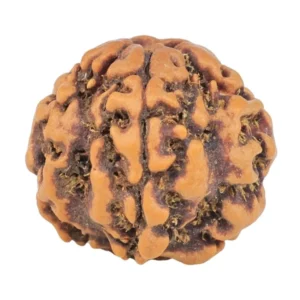 1MK(Underdeveloped) 19.6mm 2.89gm
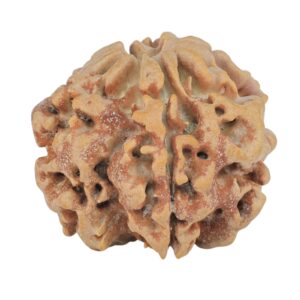 1MK(Underdeveloped) 24.4mm 4.65gm
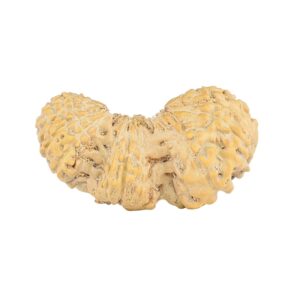 20 Mukhi Trijuti 22.8mm 0.95gm
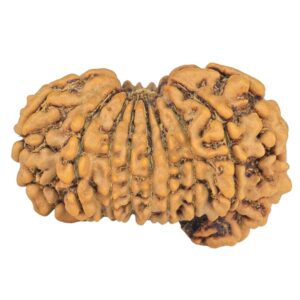 16+1 Mukhi Sawar 25.5mm 2.83gm
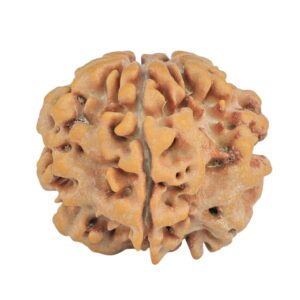 1MK(Underdeveloped) 24.4mm 4.48gm
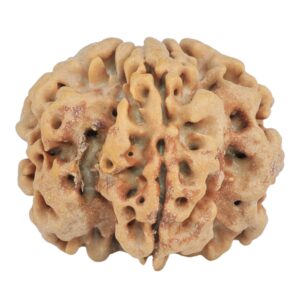 1MK(Underdeveloped) 24.5mm 4.56gm