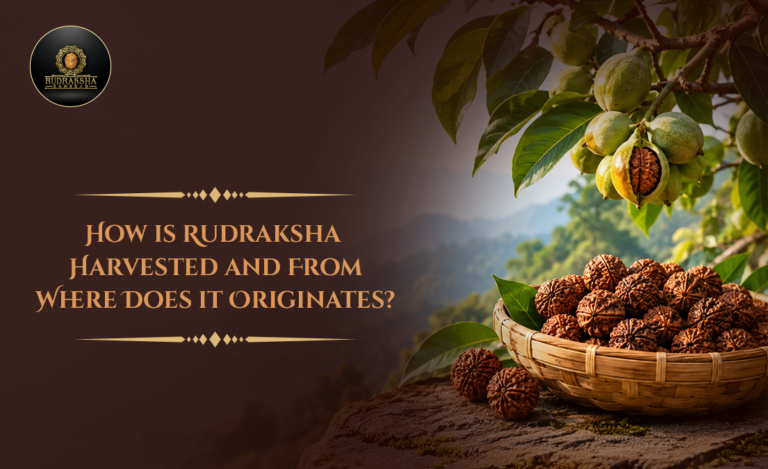
How Is Rudraksha Harvested and Where Does It Originate? 

How Is Rudraksha Harvested and Where Does It Originate? 

When you hold a finished Rudraksha, you see a dry, brown seed with natural grooves running across its surface.  But that is not how Rudraksha appears on the tree.  Every natural Rudraksha begins inside a fruit. It must mature, be harvested, separated from its outer pulp, cleaned, dried and sorted before its Mukhi can be…

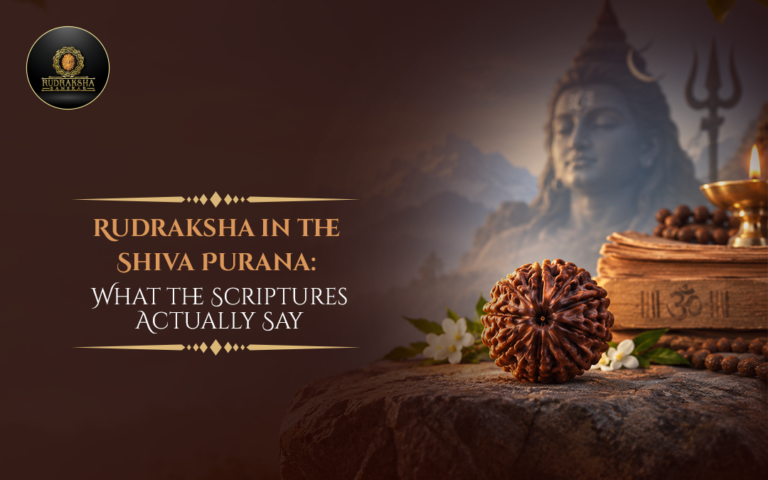
Rudraksha in the Shiva Purana: What the Scriptures Actually Say

Rudraksha in the Shiva Purana: What the Scriptures Actually Say

Search for Rudraksha online and you will find detailed charts assigning every Mukhi a deity, planet, mantra, chakra and list of benefits.  But how much of that actually comes from the Shiva Purana?  The answer requires some distinction.  The Shiva Purana does contain an important and detailed discussion of Rudraksha. It explains its sacred origin,…

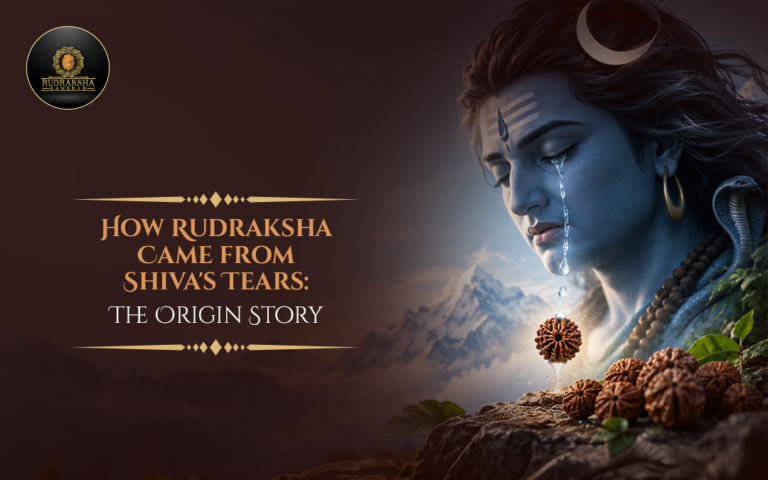
How Rudraksha Came from Shiva’s Tears: The Origin Story 

How Rudraksha Came from Shiva’s Tears: The Origin Story 

Why is Rudraksha so closely associated with Lord Shiva?  Why do devotees wear these seeds around the neck, use them for mantra japa and keep them in the puja space?  The answer begins with one of the most important stories in Rudraksha tradition:  Rudraksha arose from the tears of Lord Shiva.  This is not simply…

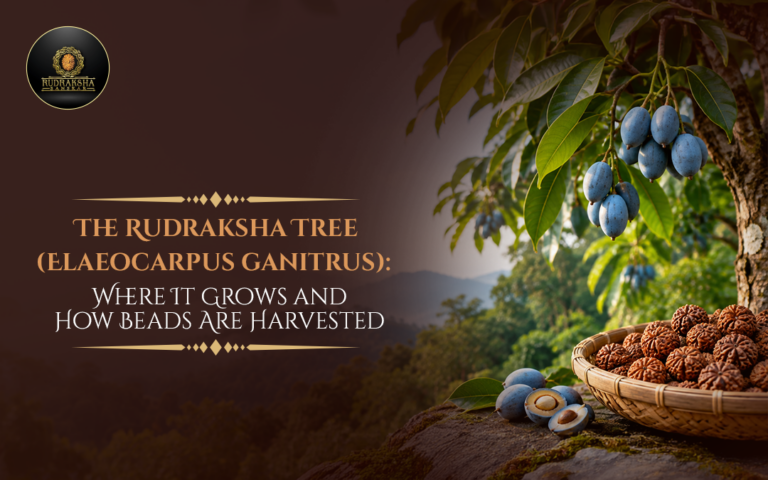
The Rudraksha Tree (Elaeocarpus ganitrus): Where It Grows and How Beads Are Harvested 

The Rudraksha Tree (Elaeocarpus ganitrus): Where It Grows and How Beads Are Harvested 

A finished Rudraksha bead looks very different from what first appears on the tree.  Before it becomes a brown, deeply textured seed used in a mala or worn as a pendant, Rudraksha develops inside a fleshy fruit growing on a living tree.  The species most commonly associated with sacred Rudraksha is Elaeocarpus ganitrus, an evergreen…

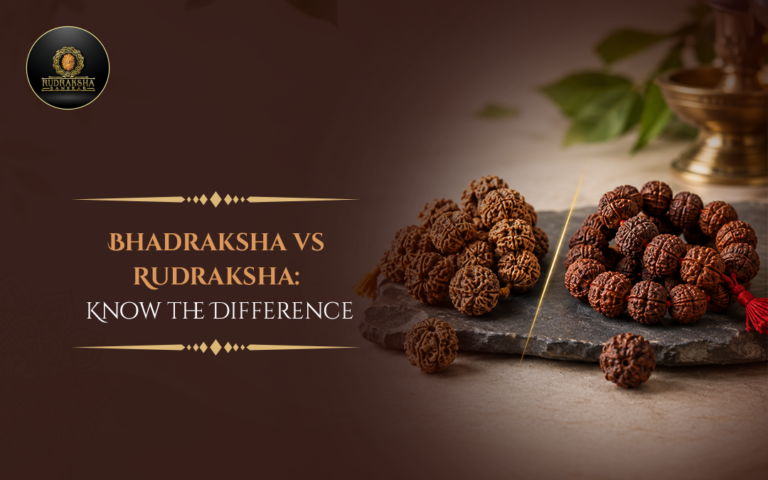
Bhadraksha vs Rudraksha: Know the Difference

Bhadraksha vs Rudraksha: Know the Difference

A bead has deep grooves, a rough surface and something that looks like Mukhi lines.  So it must be Rudraksha, right?  Not necessarily.  One of the lesser-known issues in the Rudraksha market is Bhadraksha, a term commonly used for seeds that can resemble Rudraksha closely enough to confuse an inexperienced buyer.  This becomes particularly important…

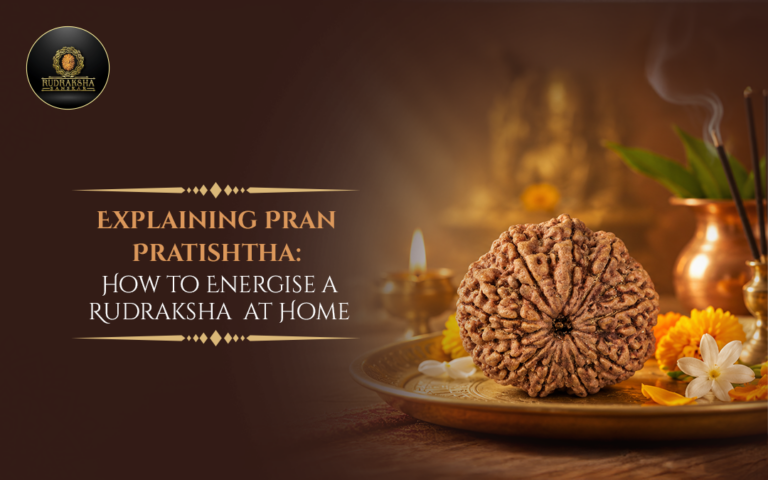
Explaining Pran Pratishtha: How to Energise a Rudraksha at Home

Explaining Pran Pratishtha: How to Energise a Rudraksha at Home

If you have just bought a Rudraksha, one question often comes next:  “Do I need to do Pran Pratishtha before wearing it?”  The short answer is:  For personal Rudraksha wearing, you usually do not need the same formal Pran Pratishtha used for temple murtis.  What most people actually need is a simple purification, mantra and…

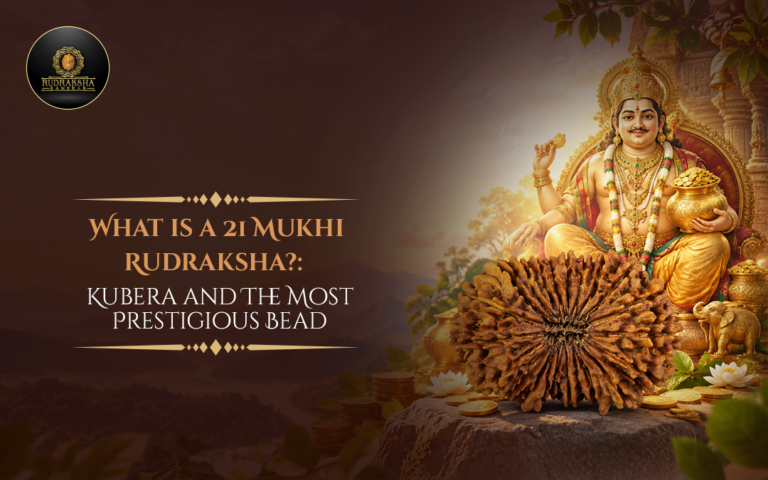
What Is a 21 Mukhi Rudraksha? Kubera and the Most Prestigious Bead

What Is a 21 Mukhi Rudraksha? Kubera and the Most Prestigious Bead

The 21 Mukhi Rudraksha sits at the extreme premium end of the commonly discussed 1–21 Mukhi range.  It is widely associated with Lord Kubera, the deity of wealth and guardianship of riches, giving the bead its traditional themes of prosperity, abundance, responsibility and preservation of wealth.  It is also one of the most prestigious Rudraksha…

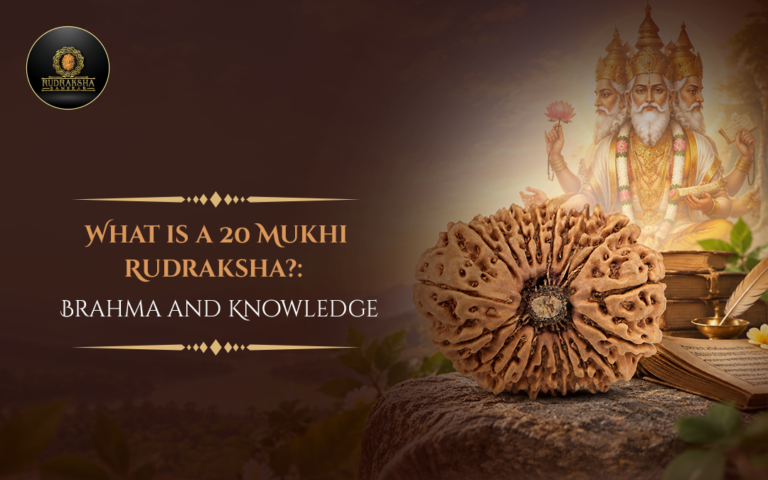
What Is a 20 Mukhi Rudraksha? Brahma and Knowledge

What Is a 20 Mukhi Rudraksha? Brahma and Knowledge

The 20 Mukhi Rudraksha sits near the extreme end of the rare 15–21 Mukhi spectrum and is widely associated in contemporary Rudraksha tradition with Lord Brahma, the creator within the Hindu Trimurti.  Its traditional themes naturally follow that association:  This makes 20 Mukhi particularly interesting for experienced spiritual practitioners, researchers, teachers, creators and collectors.  But…

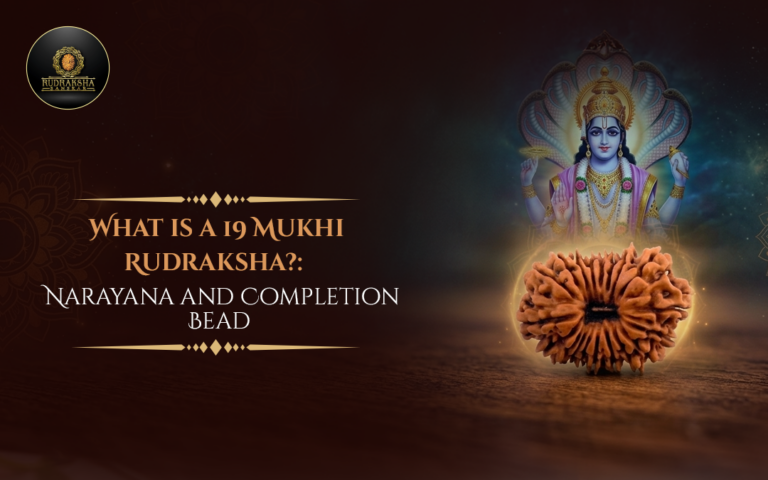
What Is a 19 Mukhi Rudraksha? Narayana and Completion Bead 

What Is a 19 Mukhi Rudraksha? Narayana and Completion Bead 

The 19 Mukhi Rudraksha belongs to the exceptionally rare higher-Mukhi range and is widely associated in contemporary Rudraksha tradition with Lord Narayana, a form of Vishnu.  Its traditional themes centre on fulfilment, abundance, stability and completion.  This has led to descriptions of 19 Mukhi as a bead for achieving goals or fulfilling desires. But those…

End of content

End of content